BMA investigation: Bunker surveyor dies during transfer between vessels
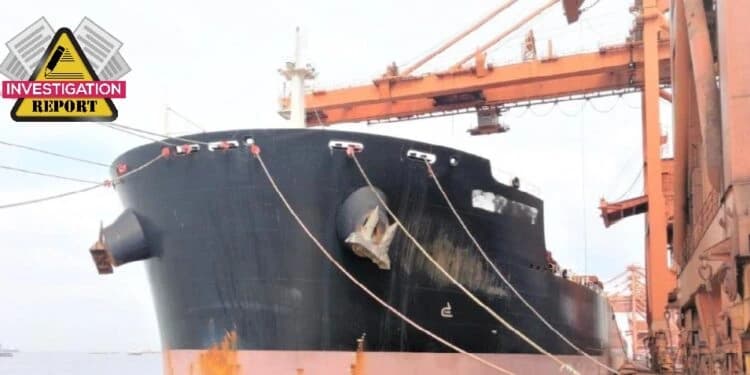
The Bahamas Maritime Authority (BMA) has released an investigation report into a fatal man-overboard incident involving a bunker surveyor who fell into the sea during a personnel transfer between a bulk carrier and a service boat.
What happened
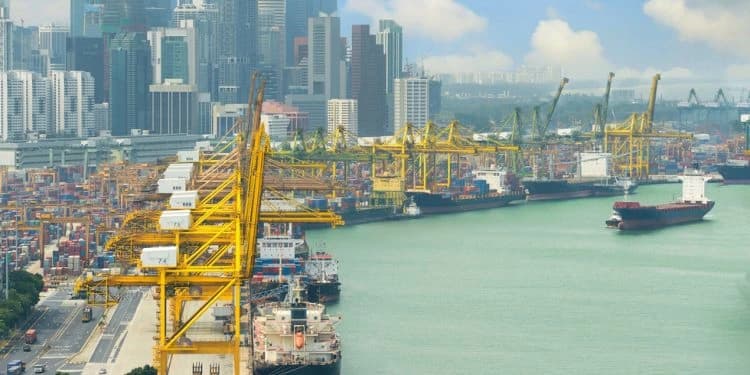
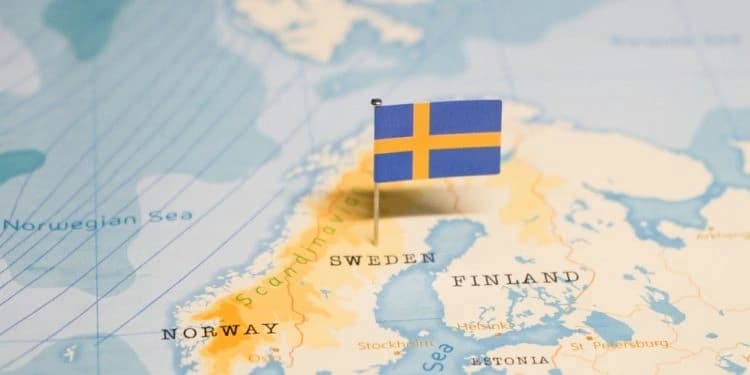
The incident occurred on 17 January 2026, at approximately 19:30 local time, while a Bahamas-flagged bulk carrier was anchored at Singapore’s Eastern Bunkering C anchorage. The vessel was preparing for several operations, including bunkering, hull cleaning, provisioning and a crew change.
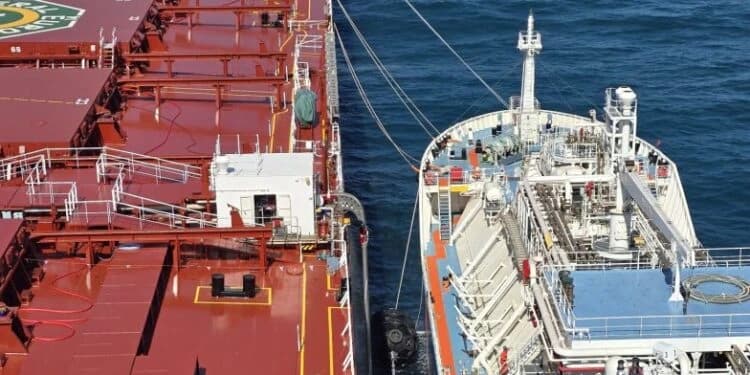
The bulk carrier was in ballast condition, with a freeboard of approximately 14.8 meters. Due to the height of the vessel, pilot ladders had initially been rigged in combination with accommodation ladders to facilitate personnel transfers.
During the evening, a service boat arrived to collect a bunker surveyor who had completed his work onboard. However, the presence of a diving barge and an approaching bunker barge restricted the available transfer arrangements.
The crew subsequently prepared the starboard accommodation ladder for the surveyor’s departure. During the preparations, the outboard stanchion was removed at the surveyor’s request.
As the surveyor attempted to step from the accommodation ladder onto the service boat, the smaller craft was pitching and rolling. He lost his footing and fell, leaving him holding onto the service boat’s deckhand and bow fenders.
Despite efforts by the service boat’s two crew members to pull him onboard, they were unsuccessful. The surveyor subsequently lost his grip and fell into the water.
Although his lifejacket inflated, it was not effectively secured and came off, leaving him without buoyancy support.
A deckhand entered the water to assist the surveyor, while divers from a nearby workboat joined the rescue effort. However, the service boat lacked suitable man-overboard recovery equipment, preventing the casualty from being brought back onboard.
At approximately 20:00, Singapore Police Coastguard personnel recovered the unresponsive surveyor from the water. Cardiopulmonary resuscitation was performed during the journey ashore, but he was pronounced dead at the hospital at 21:13.
A post-mortem examination determined that the cause of death was drowning.
Why it happened
According to the BMA investigation, several operational and organizational factors contributed to the incident.
The bulk carrier’s large freeboard, the use of a forward-leading accommodation ladder and the removal of the outboard stanchion increased the complexity of the transfer. Movement of the service boat further reduced the surveyor’s ability to complete the transfer safely.
The investigation also established that the surveyor’s lifejacket was not effectively secured. However, because the lifejacket was not recovered, investigators could not determine whether its loss resulted from defective securing straps, an unfastened waistbelt or incorrect wearing.
The service boat’s design and lack of suitable recovery equipment significantly affected the emergency response. Its relatively high freeboard and absence of a dedicated rescue area prevented the crew from recovering the surveyor, even with assistance from personnel in the water.
Furthermore, the bulk carrier’s crew were managing several simultaneous operations, including the arrival of a bunker barge, preparations for diving activities and personnel transfers.
These overlapping activities placed significant time pressure on the crew, reduced the personnel available to supervise the transfer and affected the selection of safe transfer arrangements.
The investigation found that no responsible officer was monitoring the transfer. When the incident occurred, personnel were occupied with other duties and were initially unaware of the seriousness of the situation.
Communication difficulties further complicated the response. Verbal warnings were not heard, while radio transmissions announcing the man-overboard incident did not follow standard distress communication procedures or provide sufficient information about the casualty’s location.
As a result, the bulk carrier did not deploy its lifesaving equipment to assist the rescue. The BMA also identified shortcomings in the management of simultaneous operations (SIMOPS). Although the vessel’s scheduled activities involved several overlapping tasks, their combined risks had not been effectively assessed.
Conclusions
The investigation concluded that the fatality resulted from a combination of unsafe transfer conditions, inadequate recovery capabilities and weaknesses in operational planning and supervision. The BMA highlighted that personnel transfers involving surveyors, technicians, superintendents and other shore-based workers can present hazards comparable to those encountered during pilot transfers.
However, the investigation found that safety standards and operational awareness developed for pilot transfers have not been consistently extended to other personnel exposed to similar risks.
The report also emphasized the importance of planning simultaneous operations and ensuring that overlapping activities do not compromise crew availability, supervision or emergency preparedness.
Following the incident, the BMA updated its guidance on pilot transfer arrangements, clarifying that safe transfer equipment requirements apply to all personnel embarking or disembarking using those arrangements.
The investigation recommended that:
- Service boat operators ensure their vessels carry suitable equipment to recover people from the water, considering vessel design and crewing levels.
- The Maritime and Port Authority of Singapore incorporate verification of man-overboard recovery capabilities into vessel licensing and annual inspection procedures.
- The BMA work with relevant stakeholders to develop guidance addressing the risks associated with simultaneous operations.
The findings emphasize the need to treat every personnel transfer as a safety-critical operation, supported by appropriate equipment, effective supervision, adequate risk assessment and emergency response arrangements.
DOWNLOAD THE REPORT HERE