2026 SEAFiT Crew Survey results show progress, but persistent gaps remain in crew wellbeing
The 2026 SEAFiT Crew Survey, covering 23,138 seafarers across 1,961 vessels worldwide and sponsored by NorthStandard, points to gradual improvement in crew welfare, with the SEAFiT Index rising from 70.1% in 2025 to 73.5% in 2026. Yet the findings also reveal a familiar picture: many of the fundamental concerns affecting everyday life at sea continue to surface year after year.
The year 2026 has brought significant challenges for shipping, with geopolitical instability, security threats and rapidly changing operational conditions placing renewed emphasis on the people working at sea and the support available to them.
Now in its sixth edition, the SEAFiT Crew Survey examines living and working conditions onboard and seeks to provide a data-driven picture of crew welfare. This year’s survey shifts the discussion from resilience to care, asking whether seafarers feel respected, valued and adequately supported in their work and life at sea. The 2026 survey was conducted during Q1–Q3 2026, gathering feedback from seafarers serving onboard as well as seafarers currently ashore.
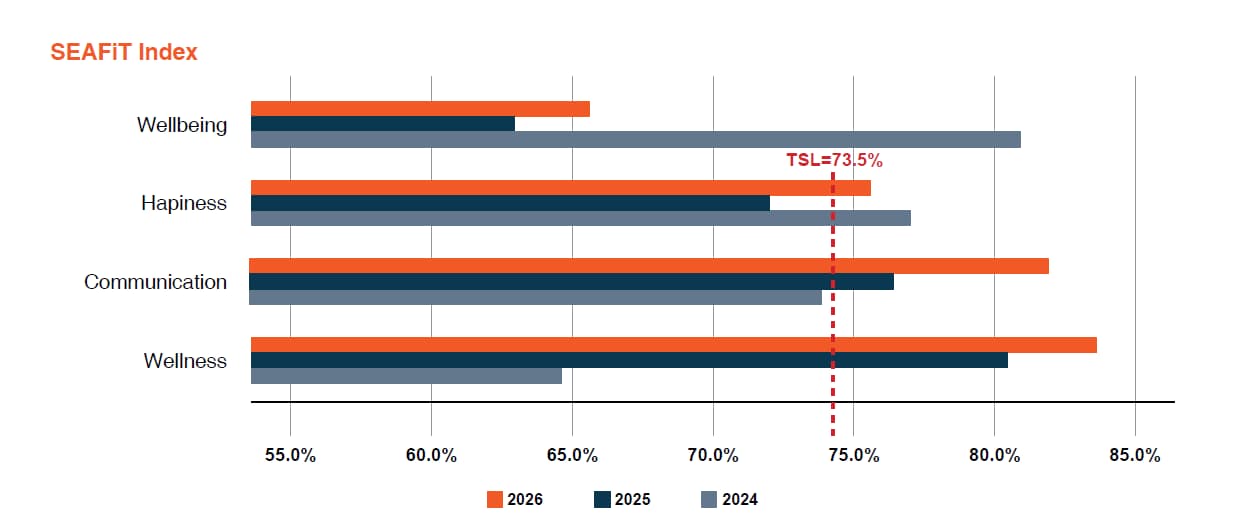
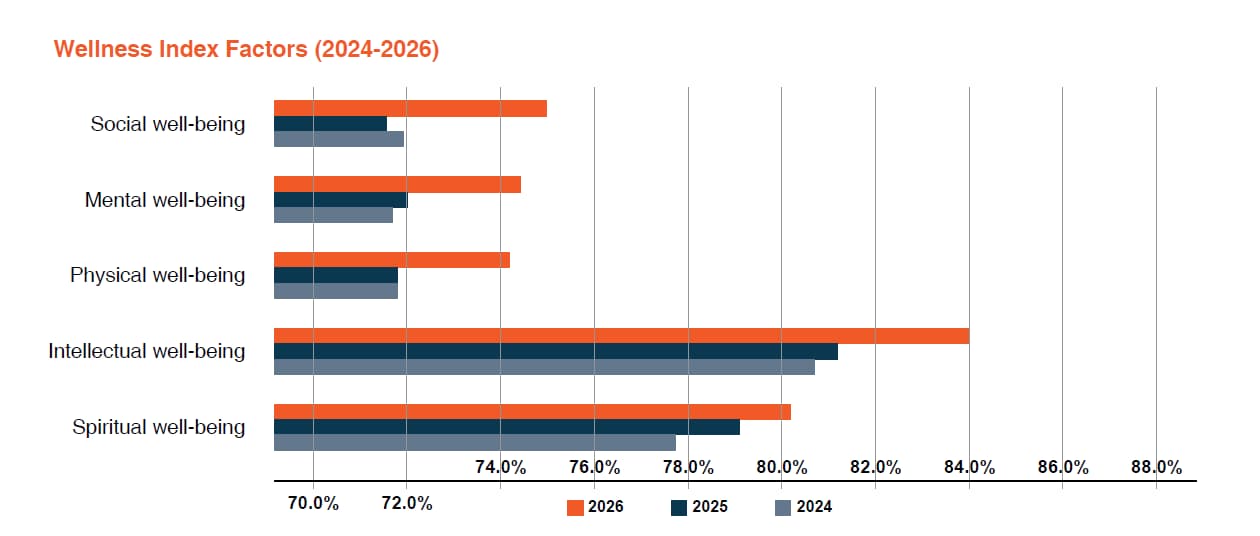
The SEAFiT Index increased to 73.5%, from 70.1% in 2025, reflecting improvement across several measured welfare indicators. The four main dimensions also recorded higher scores: Wellness reached 84.2%, Communication 82.7%, Happiness 75.2% and Wellbeing 65.2%. Wellbeing remained the lowest-scoring dimension, while the Physical Wellbeing Index rose to 74.1%, from 71.8% in both 2024 and 2025. A total of 23,138 seafarers participated in the survey, including 22,427 serving onboard and 711 currently ashore, representing 1,961 vessels.
Apo Belokas commented:
The 2026 results show progress, but they also show why a genuine culture of care must go beyond policies, programmes and good intentions. Care has to be felt in the everyday experience of seafarers – in manageable workloads, sufficient recovery, meaningful shore leave, access to mental health support, fair conditions and the ability to stay connected with home. Measuring progress is essential, but the real benchmark is whether improvements reach the ship and make life at sea healthier, safer and more sustainable.
Since its launch in 2019, the survey has sought to provide the industry with a consistent benchmark for crew welfare and encourage a more people-centred approach to life and work at sea. The 2026 edition was sponsored by NorthStandard.
Commenting on the findings, Capt. Yves Vandenborn, Head of Loss Prevention Asia Pacific at NorthStandard said:
The improvement in this year’s SEAFiT Index is encouraging, but the real value of the survey lies in understanding what sits behind the overall number. Seafarers are continuing to raise very practical concerns around workload and recovery, connectivity, shore leave, mental health support and everyday living conditions onboard. Listening to those concerns helps the industry understand where attention is still needed.
A strong Index amid growing external pressures
The SEAFiT Index remained relatively strong despite a year marked by geopolitical instability, attacks on merchant shipping and heightened security risks in key trading regions.
“A high welfare score should not be mistaken for an absence of pressure. In a year marked by conflict, piracy and prolonged uncertainty, resilience cannot be used as a substitute for protection and support.”, Apo Belokas stressed.
This global welfare index captures the experiences of seafarers across different trades, vessel types and regions, while exposure to conflict, piracy and other security threats is highly uneven. For crews operating in high-risk areas, the psychological and operational impact may therefore be considerably greater than the overall Index suggests.
The findings highlight the importance of considering the different realities experienced across vessel types, trades and regions. They also reinforce the need to assess whether seafarers feel safe, adequately informed and supported when operating in areas affected by conflict, piracy and prolonged uncertainty.
Key findings
- Communication remains a top priority. Although satisfaction with communication-related questions was high, seafarers continue to call for better internet access, larger data allowances and greater connectivity privileges onboard.
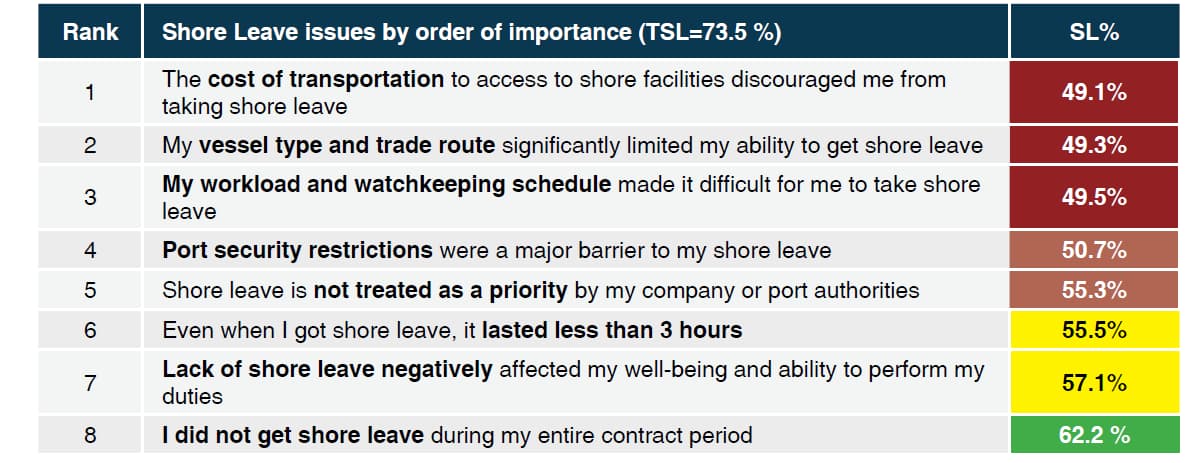
- Shore leave remains one of the weakest areas, with satisfaction below 60%. Tight operational schedules, short port stays and long distances between terminals and city areas were among the main barriers identified.
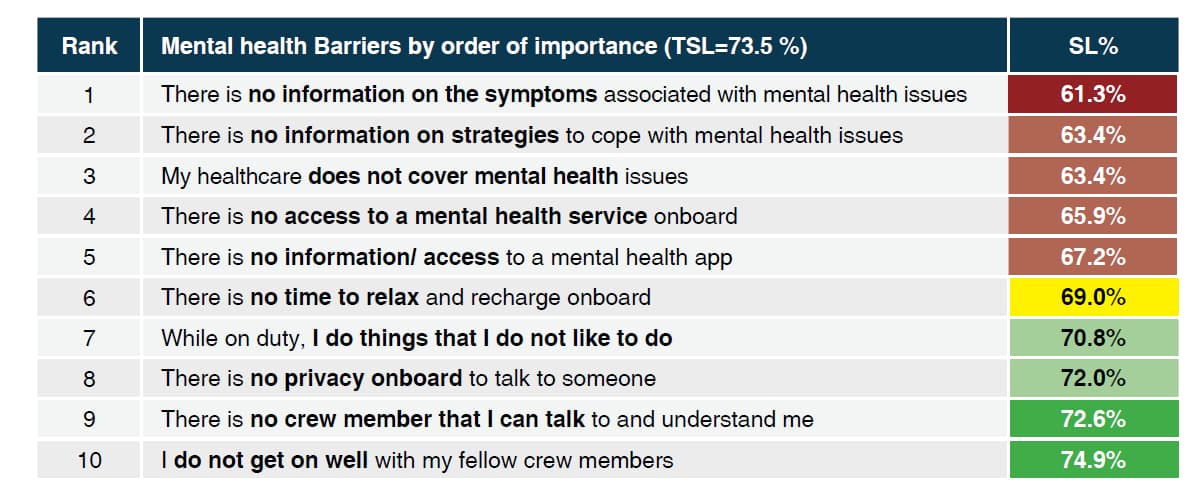
- Mental health support remains a clear gap. Key barriers included inadequate healthcare coverage for mental health issues (63.4%), insufficient guidance on coping strategies (63.4%) and lack of information on mental health symptoms (61.3%).
- Recreation and recovery remain important concerns, with seafarers continuing to highlight the need for appropriate facilities and opportunities to relax outside working hours.
- Wages and bonuses remain an important priority, with satisfaction reaching 61%. Other recurring concerns include workload, sleep quality, nutrition, food and water quality, connectivity and career development opportunities.
- Filipino seafarers represented 75.4% of participants, with Greece, Ukraine and Georgia among the other nationalities represented.
- Tankers recorded the highest vessel participation, accounting for 41% of vessels included in the survey.
Comparison between 2024,2025,2026 SEAFiT Indexes / Source: 2026 SEAFiT survey report
Comparison between 2023, 20243 & 2025 Crew Wellness Indexes / Source: 2026 SEAFiT survey report
Seafarers’ voices: Insights from open feedback
The open feedback provided further insight into the everyday issues behind the survey scores. Internet access emerged as the most frequently raised topic, with seafarers calling for larger or unrestricted data allowances, faster and more reliable connections, and better opportunities to stay in contact with family.
Recreational facilities, workload and stress were also recurring themes, highlighting the need for better opportunities to relax and recover alongside concerns over working conditions and pressure onboard. Financial and living conditions also featured strongly, with respondents raising issues around wages, bonuses and allowances, as well as food quality, variety and catering budgets. Comments also referred to accommodation, shore leave, contract conditions and crew rotations.
The feedback shows that a culture of care is often experienced through the basics of everyday life onboard. Alongside formal wellbeing programmes, seafarers are asking for reliable communication with home, adequate rest and recreation, fair compensation, good nutrition and working arrangements that recognize the pressures of life at sea.
7 priorities for industry action
Drawing on the 2026 SEAFiT findings, seven priorities stand out for strengthening crew welfare and wellbeing:
#1 Manage workload, fatigue and recovery: Review crewing levels, work-rest arrangements, rotations and onboard responsibilities to reduce fatigue and provide sufficient opportunities for recovery.
#2 Enable meaningful shore leave: Work with ports, agents and authorities to reduce operational and administrative barriers and give seafarers realistic opportunities to spend time ashore.
#3 Strengthen mental health support: Improve access to confidential professional support, mental health information, early intervention and practical guidance on coping with psychological challenges.
#4 Treat connectivity as a basic welfare need: Provide reliable, affordable and sufficient internet access so seafarers can maintain contact with family, access essential services and remain socially connected.
#5 Support social interaction and recreation: Invest in appropriate recreational facilities, shared activities and opportunities for crew interaction that strengthen morale, recovery and social cohesion onboard.
#6 Improve everyday living and career conditions: Address wages and bonuses, food quality, accommodation, career development and other aspects of life at sea that influence satisfaction, motivation and retention.
#7 Turn welfare policies into onboard practice: Ensure welfare standards and initiatives are consistently implemented and experienced onboard. Crew wellbeing should be recognised as part of safety, operational resilience and risk management, rather than solely as an HR issue.
Commenting on the priorities for action, Apo Belokas said: “Year after year, seafarers are pointing to many of the same fundamental needs. The industry already has greater awareness, more welfare initiatives and better tools to measure progress; the challenge now is to make sure they translate into meaningful change onboard.”
Commenting on the connection between crew wellbeing, safe operations and risk management, Capt. Yves Vandenborn added: ‘’From a P&I and loss-prevention perspective, crew wellbeing should not be viewed separately from safe ship operations. Workload, fatigue, recovery and the environment in which people live and work all form part of the conditions in which operational decisions are made. The important question is therefore not only whether welfare policies exist, but whether seafarers actually experience the support those policies are intended to provide onboard.”
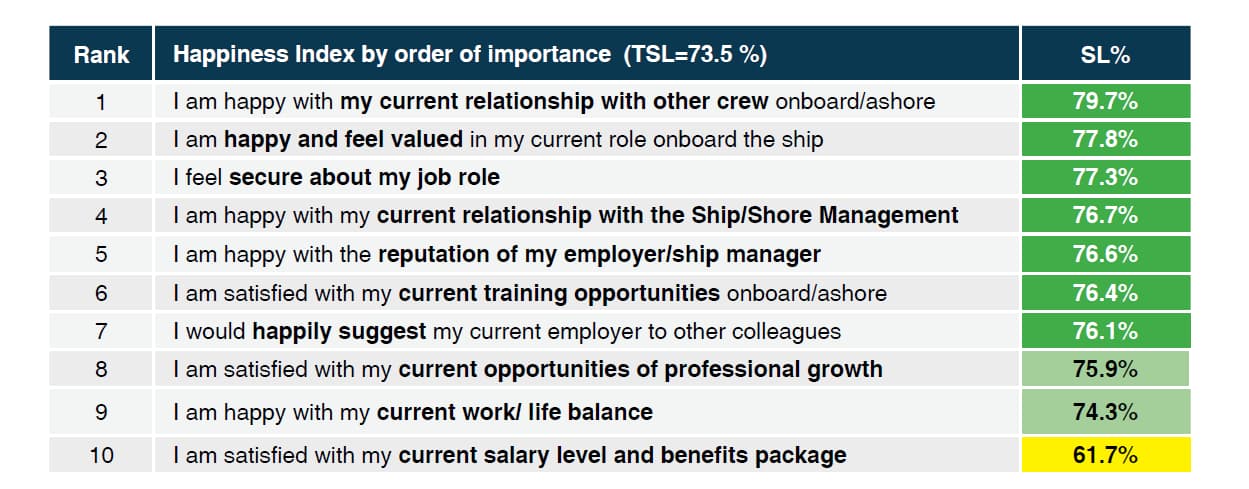
Key Factors of the Happiness Index / Source: 2026 SEAFiT survey report
Looking ahead
As the realities of life at sea evolve, the SEAFiT Crew Survey will continue to adapt. The 2027 edition is expected to strengthen its focus on emerging welfare challenges, including the impact of geopolitical tensions, piracy and high-risk voyages on seafarers’ wellbeing, as well as respect, dignity and psychological safety onboard.
These areas are becoming increasingly relevant as seafarers face conflict-related risks and operational uncertainty, while the maritime industry places greater emphasis on preventing and responding to bullying, harassment and other forms of unacceptable behaviour onboard.
By expanding its scope, SEAFiT aims to build a more complete picture of crew welfare across physical, mental and social wellbeing, working conditions, security, dignity and psychological safety. The objective is to ensure that the survey continues to reflect the changing realities of life at sea and provides actionable insight to support a genuine culture of care.
Concluding, Apo Belokas said:
The next step is clear: less emphasis on asking seafarers to endure more, and greater focus on creating the conditions that allow them to live and work well at sea. Above all, progress should be judged by whether seafarers themselves feel the difference onboard.
The 2026 findings show that seafarers continue to work in a complex environment shaped by operational pressures, evolving welfare expectations and wider security challenges. While the results are encouraging in several areas, persistent concerns around workload, recovery, shore leave, mental health support and everyday living conditions show that further action is needed to create a working environment in which seafarers feel consistently respected, protected and valued.
Reflecting on how the findings can support practical industry action, Capt. Yves Vandenborn concluded:
The value of these findings is in what we do with them. Understanding the pressures seafarers experience helps us identify where practical changes can support not only their wellbeing, but the environment in which ships are operated safely and risks are managed. NorthStandard is pleased to support SEAFiT in giving seafarers a strong voice and helping the industry turn their feedback into meaningful action onboard.
Key Mental Health Barriers / Source: 2026 SEAFiT survey report
Key Shore Leave Issues / Source: 2026 SEAFiT survey report
read the report, available at SEAFiT website