NorthStandard: Autonomy does not eliminate hazards, it changes how they arise
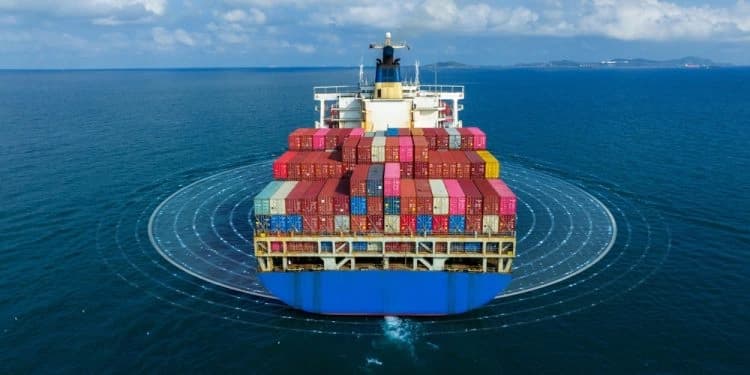
NorthStandard’s white paper highlights how remote vessel operations are reshaping safety management, human oversight, cyber resilience and insurance responsibilities.
The MASS: Navigating the Opportunities & Emerging Risks white paper, published on 10 November, combines a review of the changing risk landscape with operational experience from Belgian remote-navigation specialist Seafar. Its central message is that maritime autonomy does not eliminate traditional hazards. Instead, it changes how they arise, how they are managed and who is responsible for responding to them.
Human oversight remains central to autonomous operations
One of the paper’s most important observations is that removing or reducing personnel on board does not remove the need for competent human decision-making.
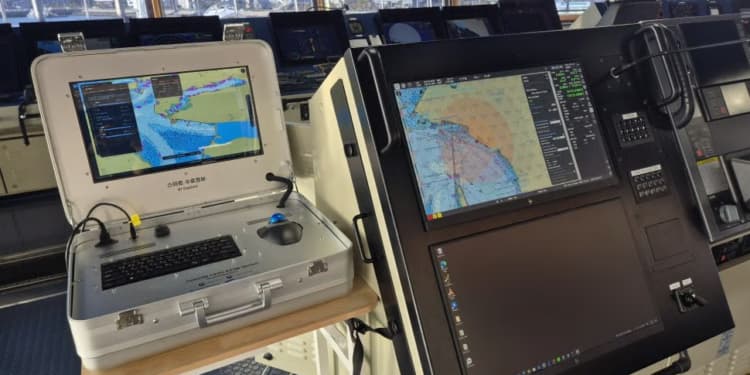
Many MASS concepts depend on Remote Operation Centres (ROCs) to perform functions traditionally undertaken at sea. Consequently, effective oversight depends on the competence, situational awareness and readiness of shore-based operators.
NorthStandard identifies vessel-specific familiarization, intervention procedures, control handovers and emergency response arrangements as fundamental requirements.
The paper also emphasizes the importance of managing fatigue and workload within ROCs. Shift design, staffing arrangements and working conditions must support sustained attention and effective decision-making.
Seafar’s operational experience reinforces this point. Its vessels are supervised by certified masters working from shore, supported by onboard personnel where required. Remote masters undergo additional training covering system handling, communications, emergency response and multi-vessel situational awareness.
Connectivity and cyber resilience become direct safety concerns
Remote operation introduces dependence on communications networks, onboard sensors, software and shore-based infrastructure. NorthStandard stresses that cyber security must therefore be understood as an operational safety issue rather than solely an information technology concern.
A cyber incident affecting navigation, propulsion or communications systems could have physical consequences, including collisions, groundings, pollution, cargo damage or loss of vessel control.
The same principle applies to technical failures. Radar, AIS, cameras, LiDAR and other sensors must remain reliable under varying conditions, while operators need arrangements to identify degraded performance.
Experience from Seafar indicates that maintaining resilient communications across waterways, bridges and locks can be technically demanding. Sensor performance in rain, fog, glare and dense traffic also presents challenges beyond controlled demonstrations.
A particularly important operational principle is the need for vessels to maintain or reach a safe state when communications or critical systems fail.
Seafar describes predefined responses that may involve reducing speed, holding position where appropriate and alerting nearby traffic until communications are restored or onboard personnel intervene.
Risk management must extend across the operating system
Traditional vessel risk assessments remain necessary, but autonomous operations require a broader examination of interconnected systems and responsibilities.
NorthStandard identifies seven areas that should be considered before MASS operations begin: regulatory and classification compliance, ROC competence and resilience, cyber maturity, emergency response, contractual risk allocation, data retention, and maintenance, testing and software updates.
These considerations demonstrate that the safety of an autonomous vessel cannot be assessed independently of its shore-based infrastructure and supporting organizations.
Data retention is particularly significant. As control functions become distributed across vessels and remote facilities, the ability to reconstruct decisions and technical events following an incident becomes increasingly important.
Similarly, emergency response arrangements must account for situations in which few or no personnel are available on board to address machinery failures, fires or other unexpected conditions.
For management teams, these developments expand the scope of safety assurance beyond the vessel itself.
Practical adoption is advancing but regulatory fragmentation remains
The Seafar case study illustrates where remote and semi-autonomous operations are currently gaining practical traction.
According to the company, inland cargo vessels operating on established European waterways, including the Rhine, Meuse and Scheldt, offer particularly suitable conditions.
Their repetitive routes, relatively mature infrastructure and demand for qualified masters create opportunities for remote supervision and crew optimization.
However, the company identifies regulatory fragmentation as a major constraint on wider deployment.
Although progress has been made through regional frameworks and authorizations, differences between jurisdictions and the absence of fully harmonized certification and operating standards create difficulties for operators seeking to expand.
The distinction between regulatory environments is important. The IMO MASS Code provides an international framework for eligible cargo ships, whereas the inland operations highlighted in the case study are also subject to their own national and regional requirements.
This suggests that technological readiness alone will not determine the pace of adoption. Regulatory alignment, infrastructure availability and demonstrable safety performance will also influence deployment.
Operational benefits depend on disciplined implementation
The white paper identifies several potential benefits associated with remote and crew-optimised operations. These include addressing shortages of qualified personnel, improving crew rotation, maintaining vessel availability and achieving greater consistency in operational practices.
Seafar also identifies opportunities to improve performance monitoring and reduce risks associated with single-master operations.
Nevertheless, these benefits must be considered alongside the investment required for communications infrastructure, technical redundancy, training, regulatory compliance and emergency preparedness.
The case study provides qualitative evidence of operational experience rather than quantified, independently verified improvements in safety performance or cost efficiency.
This distinction matters when assessing the business case for broader deployment.
Emerging themes and practical implications
Across the publication, three connected themes emerge.
- First, safety management is becoming more distributed. Effective operational control may depend on several parties, requiring clearer governance, defined authority and coordinated responses to unexpected situations.
- Second, digital resilience is becoming inseparable from navigational safety. Communications, cyber protection and software reliability must be considered alongside conventional maritime hazards rather than treated as separate technical matters.
- Third, workforce requirements are changing. Remote operations may reduce some onboard crewing demands, but they increase the importance of specialized competencies, ROC training, fatigue management and shore-based supervision.
For shipowners and operators, these developments have implications for safety management systems, procurement, contractual arrangements, emergency planning and workforce development.
Insurance considerations also require attention. Although autonomous-vessel liabilities may fall within established mutual P&I arrangements, the presence of shore-based facilities and personnel introduces exposures that may require separate insurance solutions.
The practical challenge is therefore to ensure that technical capabilities, organizational controls and risk-transfer arrangements develop together.
Executive reflection
The findings raise several questions for maritime decision-makers considering remote or semi-autonomous operations.
Can existing safety management systems adequately address decisions made from shore? Are fallback procedures tested against realistic technical failures and unexpected operating conditions? Have responsibilities between vessel owners, remote operators and technology providers been clearly defined?
Management teams must also consider whether current training, reporting, maintenance and emergency response arrangements remain sufficient when operational functions are transferred away from the vessel.
As Ioannis Papaefthymiou, Head of Commercial Autonomous Navigation and Managing Director at Anschütz Panama & Anschütz do Brasil, had explained in an exclusive interview to:
The immediate future of maritime autonomy is not about removing mariners from vessels, it is about delivering high integrity decision support to the bridge team today
These questions are relevant not only to organizations pursuing fully autonomous shipping, but also to those introducing remote assistance, automated navigation functions or other forms of digitally supported vessel operation.