Carriage of AEDs onboard can strengthen emergency response and save lives
At sea, the first minutes of a medical emergency can define the outcome. This is particularly true in cases of sudden cardiac arrest, where immediate response is critical and professional medical assistance may be hours away.
Against this background, the carriage of Automated External Defibrillators (AEDs) onboard ships is gaining increasing attention as a practical measure that can strengthen emergency preparedness and potentially save lives.
Why AEDs matter
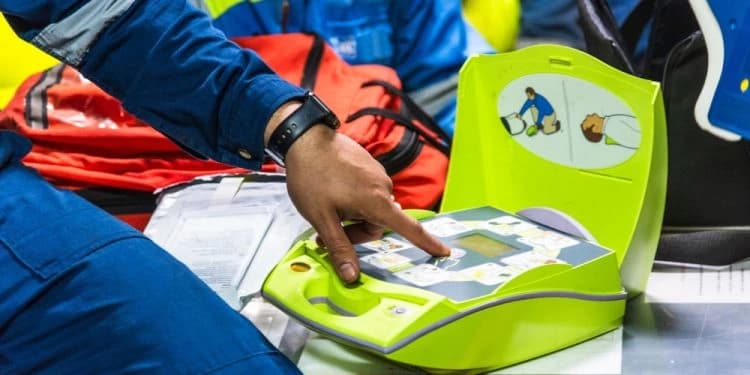
AEDs are designed to restore the rhythm of the heart in certain types of cardiac arrest by delivering an electric shock. Modern devices are straightforward to use, relatively low cost and require only basic training. They assess the patient’s condition and indicate whether and when a shock should be administered, making them suitable for use by trained lay responders, including crew members.
The UK Maritime and Coastguard Agency (MCA), through MGN 297 (M) Amendment 2, recommends that ship operators undertake a risk assessment, with external advice if necessary, to determine whether AEDs should be carried onboard.
According to the MCA, this assessment should consider factors such as the number of people onboard, the ratio of crew to passengers, the age profile of those onboard, and any additional risk factors that may increase the likelihood of a cardiac event.
The importance of early defibrillation
The clinical argument is clear. The MCA notes that the best chance of successful resuscitation occurs when defibrillation and other first aid procedures are carried out with minimum delay, ideally within the first three minutes. The chances of resuscitation fall by at least 10% with every minute that defibrillation is delayed, making the immediate availability of an AED a significant advantage.
This issue is particularly relevant for seafarers, who work in one of the most medically isolated environments. MarinePALS has called for AEDs to become mandatory on all merchant vessels, stressing that cardiovascular disease remains one of the leading causes of death at sea and that crews are often the only available responders during the critical early minutes of a cardiac arrest.
Captain Pradeep Chawla, CEO of MarinePALS, has urged the industry and regulators to treat access to defibrillation not as an optional enhancement, but as an essential life-saving measure.
Regulatory attention is growing
Transport Malta has also highlighted the growing importance of AEDs onboard ships. In Merchant Shipping Notice 198, the Authority notes that while international regulations do not currently mandate the carriage of AEDs, the safety and wellbeing of seafarers and passengers remain a priority.
It strongly recommends that passenger vessels and other vessels sailing beyond GMDSS Sea Area A2 undertake a risk assessment to determine whether AEDs should be carried onboard.
Transport Malta further recommends that Malta-flagged vessels be equipped with at least one AED suitable for marine conditions. When considering procurement and installation, the Authority points to four practical requirements: the device should be rugged and water-resistant; it should be placed in a clearly marked and easily accessible location; crew should be familiar with its operation through regular first-aid drills; and battery life, electrode pads and functionality should be checked as part of planned maintenance.
Training, maintenance and telemedical support
However, carrying an AED is only one part of the response chain. Crew members must also receive suitable familiarization training in AED use, alongside cardiopulmonary resuscitation (CPR), with regular refresher training to maintain competence.
In addition, masters and operators should ensure that telemedical advice procedures are clearly understood and that evacuation or onward medical care is arranged as a matter of urgency following any use of a defibrillator.
A practical investment in crew welfare
Ultimately, an AED cannot replace professional medical care. Yet, in the unique environment of shipping, where distance and time often work against the patient, it can provide the crew with a critical opportunity to act before shore-based help is available.
For this reason, the voluntary carriage of AEDs onboard should be seen as a practical investment in emergency response, crew welfare and the protection of life at sea.