BMA warns of deadly consequences of food allergy errors at sea

Based on the preliminary findings of a marine safety investigation, the Bahamas Maritime Authority has issued a safety alert to raise awareness of the serious risk posed by food allergies and share best practice in the immediate recognition and first-line treatment of anaphylaxis on board ships.
The incident
As informed, on 23 June 2026, a teenage passenger onboard a Bahamas flagged passenger vessel was mistakenly given cow’s milk. She suffered a severe allergic reaction and, despite extensive medical care onboard and a paramedic-supported helicopter evacuation, later died in hospital.
Allergies
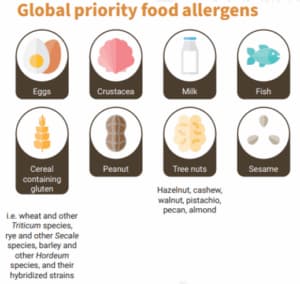
An allergy is the response of the body’s immune system to normally harmless substances, including food. Whilst in most people these substances pose no problem, in allergic individuals their immune system identifies them as a ‘threat’ and produces an inappropriate response. In more severe cases it causes anaphylaxis, which is a life threatening allergic reaction.
The World Health Organization (WHO) estimates that over 220 million people must avoid certain foods because of allergies globally. In 2020, WHO identified a global priority list of food allergens based on their potential to cause anaphylaxis.
Many countries have longer lists of allergen that are required to declared by law (9 in The Bahamas and USA, 14 in the UK and European Union, 23 in Australia and New Zealand).
Many people have allergies to other foods not listed in the global priority list. Incidence of allergies varies by region. A study published in the British Medical Journal in 2021 identified that cow’s milk had become the most common cause of fatal anaphylaxis in older children across the United Kingdom.
Leading causes of fatal anaphylaxis can vary country to country, the key thing to remember is any food allergy can cause anaphylaxis.
Anaphylaxis
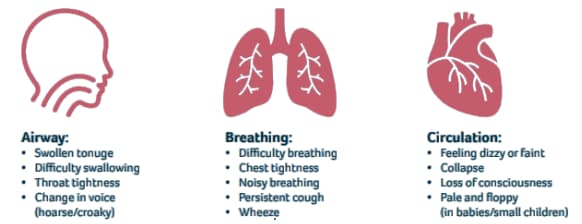
Anaphylaxis is a severe and life-threatening allergic reaction. It should always be treated as a medical emergency. Symptoms need to be recognized early and treated quickly with the medicine ‘adrenaline’ (also known as epinephrine) by intramuscular injection.
Most rapid-onset allergic reactions present with mild to moderate symptoms and will usually settle in a short time. However, if exposure is suspected, it is recommended to monitor the affected person carefully in case any severe symptoms develop.
Medical emergency protocols must be followed if any of the following are present:
First line treatment
- If anaphylaxis is suspected, adrenaline is the first-line treatment. Do not delay administration while waiting for other symptoms to develop. Give adrenaline (in the front-outer part of the upper thigh) if an auto-injector is available. If in doubt: give it.
- If there is no adrenaline auto-injector immediately available, the affected person needs to receive help where they are. Raise the alarm and have the medical team come to the affected person.
- Anaphylaxis can cause a sudden life-threatening drop in blood pressure. Standing or walking (such as leaving to fetch an auto-injector) can worsen the outcome. Encourage the affected person to lie flat with their legs raised (or sit them up if they are having breathing problems) ensuring they avoid standing or walking until help arrives.
- If the medical team have not arrived on site and there is no improvement after five minutes and another adrenaline auto-injector is available, a second dose of adrenaline can be given (in the opposite leg).
- Intramuscular adrenaline is the first line treatment of anaphylaxis. Antihistamines are not a recommended treatment for anaphylaxis. Antihistamines are used for mild to moderate allergic reactions.
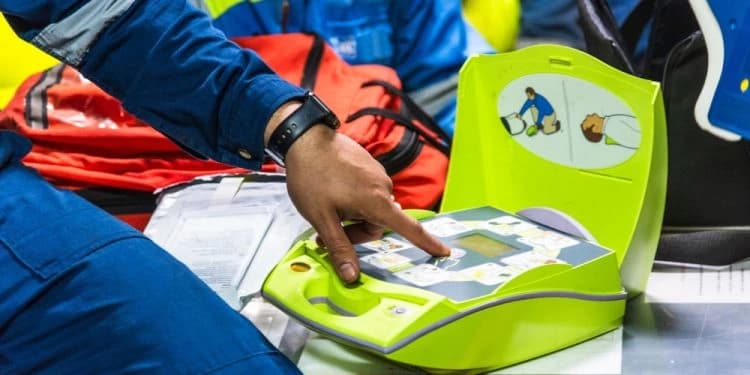
- An adrenaline auto-injector is a medical device used to deliver a quick dose of adrenaline. Trade names include Epipen, Jext and Anapen. A nasal spray EURneffy is also available.
Previously, the Bahamas Maritime Authority (BMA) had issued a new Marine Notice to provide guidance on the list of all medicines and medical supplies to be maintained on board.
Preparedness
As well as needing robust systems to manage allergens in food preparation and clear communications between consumers and catering staff, it is important to prepare crew to respond to a suspected allergy exposure.
Food safety training, processes and systems should reinforce the importance of intervention if an allergy exposure is suspected. Confidence can be built through inclusion of severe allergic reaction scenarios in onboard emergency drills.
Recommended action
Masters and operators are encouraged to review their:
- Systems to support allergen avoidance: Does your system have redundancy or can a single error result in a result in a known allergen being giving to a person with disclosed allergy?
- Declarations and management of information on food allergies: Is the allergy information gathered used in a way that supports crew and protects those at risk?
- Food labelling and allergen controls: Do controls cover the allergies that might be encountered onboard, considering crew and passenger demographics?
- Medical emergency response procedures: Do protocols consider actions to take beyond those of the medical team?
- Crew awareness, training and familiarization: Do they prepare personnel for first response as well as allergen control?