Infectious disease at sea: Five checks shipowners should not overlook

Seafarers operate across borders, climates and health environments, often moving between vessels, ports, airports and shore locations within a short period of time. This makes infectious disease prevention a practical part of crew health management, rather than an issue to consider only when an outbreak occurs.
The risk can change from one voyage to another. A new trading area, different port rotation, shore exposure or crew change may introduce health risks that were not relevant when the original voyage or employment arrangements were made.
Recent guidance from the UK Maritime and Coastguard Agency (MCA) provides a useful reminder that prevention starts well before symptoms appear. From vaccination and malaria precautions to job-specific exposure and onboard medical arrangements, shipowners should ensure that infectious-disease controls reflect where their vessels are actually operating and what their crews may encounter.
The World Health Organization (WHO) also continues to highlight the global burden of mosquito-borne and other infectious diseases. Malaria alone caused an estimated 282 million cases and 610,000 deaths globally in 2024, while dengue remains widespread across tropical and subtropical regions.
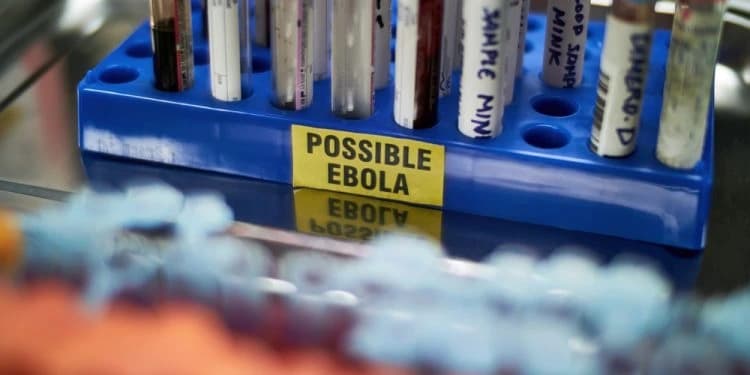
A recent Ebola outbreak in the Democratic Republic of the Congo and Uganda also showed why operators should remain alert to evolving public-health risks, even where maritime operations and port calls remain unaffected, as local health requirements can change quickly
Against this background, five areas deserve particular attention.
1. Assess the risk against the actual voyage
Infectious-disease risk is not static. Where a vessel trades, how long it remains in port, whether crew members go ashore and how seafarers travel when joining or leaving the ship can all affect their level of exposure.
The MCA advises employers to consider factors including the ports visited, duration of calls, potential exposure ashore, countries through which seafarers travel and the nature of their onboard duties.
This means a health risk assessment undertaken at the beginning of a contract may not necessarily remain appropriate throughout it.
Where destinations are initially unknown, the risk assessment should be carried out once they become known. Similarly, a change in the vessel’s normal trading pattern may require existing precautions to be reconsidered.
WHO also advises international travellers to assess health risks associated with their destination and transit locations and to seek appropriate pre-travel health advice.
For shipowners, the takeaway is clear: changes to a vessel’s trading pattern should also trigger a review of relevant crew-health risks.
2. Check vaccinations early
Vaccination requirements and recommendations vary considerably between trading areas. Depending on the itinerary and individual circumstances, seafarers may require additional protection against diseases such as hepatitis A, typhoid, yellow fever or meningococcal disease.
Timing matters. The MCA notes that a complete course of vaccination may take up to a month to complete and become effective, meaning that leaving these checks until shortly before deployment may be too late.
WHO similarly recommends reviewing routine vaccination status as well as any vaccines required or advised for particular destinations before international travel.
The MCA guidance also makes clear that maritime employers should establish seafarers’ vaccination status before assignment and arrange appropriate preventive measures where needed. This includes relevant immunisations and, where applicable, malaria prophylaxis.
3. Consider the job as well as the destination
Two seafarers travelling to the same port may face very different risks depending on their duties onboard.
Crew members working on sewage systems, for example, may have greater exposure to faecal contamination. Following an appropriate risk assessment, hepatitis A vaccination may be recommended, while typhoid protection may also need consideration in endemic areas.
Food handlers present a different concern because infection can potentially be transmitted to other crew members or passengers through food preparation.
Personnel responsible for medical care onboard may require protection against hepatitis B, while deck crews working in tropical areas may face greater exposure to mosquito-borne diseases.
The important point is that infectious-disease planning should look beyond the vessel’s destination. What the individual seafarer actually does onboard can be just as important as where the vessel trades.
4. Do not underestimate mosquito-borne disease
Malaria, dengue, yellow fever, Zika and other mosquito-borne diseases remain an important risk for ships trading in many tropical and subtropical regions.
WHO describes malaria as preventable and curable, but prevention depends on both avoiding mosquito bites and, where appropriate, taking preventive medication.
Dengue requires particular awareness because the mosquitoes that spread the disease are active during the daytime as well as around dawn and dusk. WHO notes that prevention largely depends on avoiding mosquito bites and controlling mosquito populations.
Recommended measures include:
- wearing clothing that covers exposed skin;
- using suitable insect repellent;
- keeping doors, portholes and other openings closed where practical;
- using screens and mosquito nets where appropriate; and
- using air conditioning where available.
For malaria, medication may need to begin before arrival in the affected area and continue after departure, depending on the medicine prescribed and the level of risk.
has previously highlighted the importance of considering the actual port and voyage exposure when assessing malaria risk rather than relying only on broad country classifications.
5. Make prevention part of normal shipboard management
Perhaps the most important point is that infectious-disease prevention should not depend solely on individual seafarers taking precautions.
Shipowners and employers should have appropriate arrangements in place to manage infection risks, provide information to crews, maintain relevant medical supplies and ensure preventive measures are available when required.
The MCA states that these arrangements should form part of an effective and auditable management system.
Crew awareness also matters after exposure
Seafarers who become unwell should tell medical professionals where they have recently travelled or worked, particularly when experiencing symptoms such as fever, flu-like illness or diarrhoea.
In the case of malaria, exposure history remains particularly important. The MCA advises anyone becoming ill to report possible exposure for up to 12 months after leaving a malarial area, especially where fever develops.
Where malaria is suspected onboard, telemedical advice should be sought. Seafarers treated for suspected malaria should also receive a medical examination at the next port, while serious cases may require urgent hospital treatment.
Previous coverage has also highlighted cases in which malaria treatment was delayed because infected seafarers were thought to have the flu, demonstrating the importance of early recognition and timely medical attention.
Prevention should follow the voyage
Infectious-disease prevention is not simply a matter of having vaccinations recorded or medicines stored onboard. It requires shipowners to understand where crews are travelling, what they may be exposed to and whether existing controls remain appropriate as the vessel’s operations change.