European Commission establishes new EU Sanctions Office to strengthen enforcement

The European Commission has established a new EU Sanctions Office to improve sanctions implementation, strengthen enforcement and prevent circumvention across the bloc.
Announced on 18 November 2026, the new office will bring together expertise covering the entire sanctions process, from policy development to implementation, enforcement and cooperation with third countries. The changes will take effect on 16 January 2027.
According to the Commission, the office will support EU Member States through faster compliance guidance, improved data sharing, and economic and technical analysis to ensure more consistent implementation of sanctions.
Its responsibilities will cover all EU sanctions regimes, particularly those concerning Russia, Belarus, Iran, North Korea and Syria, as well as measures related to hybrid threats and organized crime.
The initiative follows the expansion of EU sanctions in response to Russia’s invasion of Ukraine. Since the beginning of the war, the EU has adopted 21 sanctions packages, increasing the need for stronger coordination and enforcement.
As previously highlighted, the EU’s 21st sanctions package introduced additional compliance requirements for shipping, including restrictions targeting Russia’s energy revenues and sanctions-circumvention networks.
More recently, the EU expanded sanctions against Russia’s shadow fleet support network, building on measures covering vessels providing operational support to sanctioned tankers, including bunkering and ship-to-ship transfer services.
The office will operate within the Commission’s Secretariat-General under the political responsibility of Commissioner Maria Luís Albuquerque. It will bring together expertise from several Commission departments, including those responsible for financial services, trade, taxation and customs, and anti-fraud activities.
Working closely with Member States and international partners, we will reinforce implementation, close loopholes and prevent circumvention. A stronger, more coordinated European approach will make our sanctions more effective and our external action more credible.
… said Maria Luís Albuquerque, Commissioner for Financial Services and the Savings and Investments Union.
A key responsibility will be supporting the EU Sanctions Envoy in preventing sanctions circumvention, particularly through alternative trade routes, financial channels and procurement networks. This work will involve cooperation with third countries to address potential loopholes.
The Commission has also appointed Lars Danielsson as the new International Special Envoy for the Implementation of EU Sanctions. He will assume the position on 6 February 2027, succeeding David O’Sullivan.
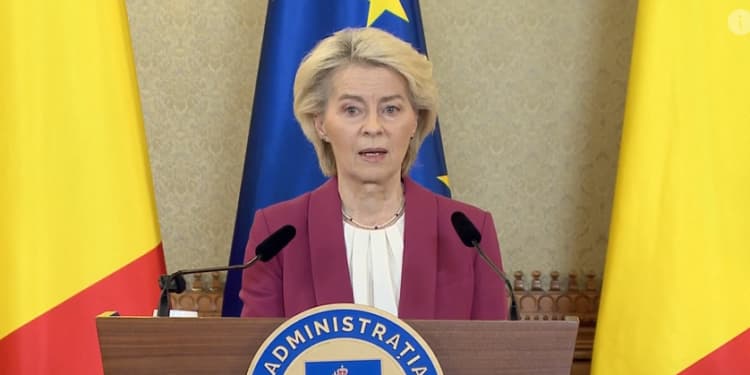
Commenting on the initiative, European Commission President Ursula von der Leyen emphasized the importance of effective implementation and enforcement.
To be effective, they must be fully implemented, rigorously enforced and protected against circumvention
… she stated, referring to EU sanctions.
The new structure is intended to strengthen coordination between EU institutions, Member States and international partners, while supporting more consistent enforcement across existing sanctions regimes.