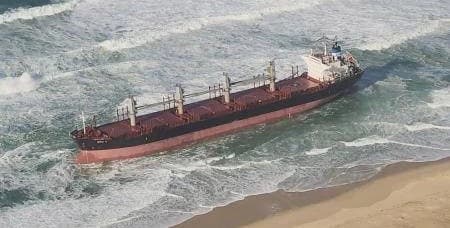
French authorities are mounting a difficult salvage effort to refloat the Malta-flagged bulk carrier Miro G, which ran aground off France’s Atlantic coast during severe weather. All 22 crew members were safely taken off the ship, but the vessel’s position near shore, shallow waters and worsening conditions have made the operation highly complicated.
Grounding followed drifting and anchor drag
The ship grounded early on November 20, 2026, near Cap de l’Homy beach in Lit-et-Mixe, in southwestern France, after strong winds and heavy seas pushed it off position and caused it to drag anchor. The French Atlantic Maritime Prefecture said the vessel had already reported maneuvering problems to the maritime rescue coordination center CROSS Étel on the evening of November 19 while drifting toward the coast.
After an attempt to set up an emergency anchorage, wind gusts of 48 knots led the ship to drag anchor before it came aground the next morning. French authorities then activated level 3 of the ORSEC maritime emergency response plan and the Franco-Spanish Biscaye Plan, bringing in emergency support including the Spanish rescue tug Sar Gavia.
Evacuations completed before weather deteriorated
A French Air and Space Force helicopter removed 19 of the vessel’s 22 crew members on November 20. The master and two other crew members stayed aboard at first to support the emergency response and help prepare for refloating efforts.
Authorities later evacuated the 11 people still onboard on November 21. That group included the three crew members, four specialists from the French Navy’s assessment and intervention team, three representatives of salvage company Les Abeilles International and one representative of the shipowner’s insurer. The evacuation was ordered before conditions were expected to worsen on November 22, when winds were forecast to reach force 7 to 8 on the Beaufort scale, along with strong gusts.
Officials also carried out a ballasting operation to reduce movement and improve stability, in an effort to lower the risk of capsizing as the weather deteriorated.
Shallow water and equipment limits hinder salvage work
The refloating effort faces major technical hurdles because the ship sits close to shore in shallow water and the weather remains difficult. The French emergency towing vessel Abeille Bretagne was sent from Brest and picked up a 1,000-meter towing line at La Pallice in La Rochelle before heading toward the grounding site.
- Shallow waters prevent the rescue tug from getting closer than about 900 meters to the grounded Miro G, making it harder to establish a towing connection.
- Reports also say the vessel’s two main generators are unavailable, which could affect equipment needed for deballasting and refloating.
The French Atlantic Maritime Prefecture said several technical conditions must be met before refloating can begin, and each stage has to be checked before the operation moves forward. Authorities plan to use the first suitable weather window, but they have not guaranteed success. If the weather blocks an early attempt, the salvage work could take longer.
Pollution concerns remain under close watch
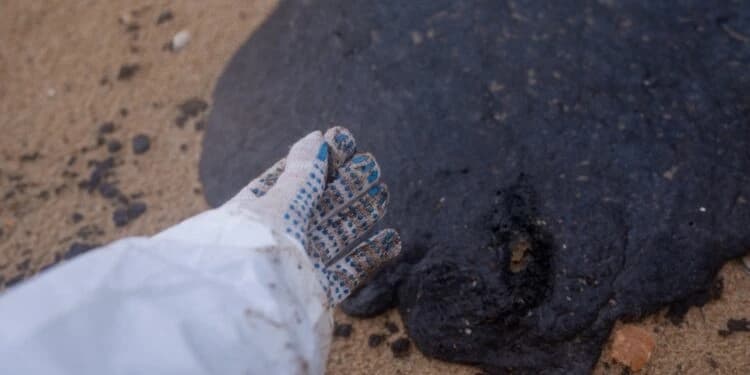
The 169-meter bulk carrier was sailing without cargo when it grounded, but it reportedly had more than 100 tonnes of fuel onboard, creating concern over possible marine pollution if fuel tanks are damaged. French authorities have sent assessment teams to inspect the ship and review salvage options while monitoring the situation to prevent further deterioration.
A temporary 1,000-meter maritime exclusion zone was set up around the grounded vessel on November 21 to restrict unauthorized activity near the site and protect the emergency response. As of November 23, the ship had not been confirmed refloated, and the timing and outcome of the salvage operation remained dependent on weather conditions and technical preparations.