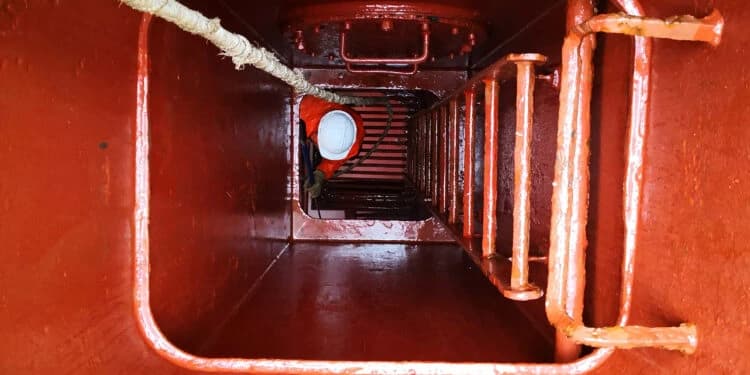
India has put mandatory enclosed space entry rules in place for ships, adding firmer requirements for risk assessment, crew preparation and emergency response. The new directive is designed to reduce casualties and improve safety whenever crews must enter spaces that can hold oxygen-deficient, oxygen-enriched, flammable or toxic atmospheres.
DGMA issues notice after IMO revision
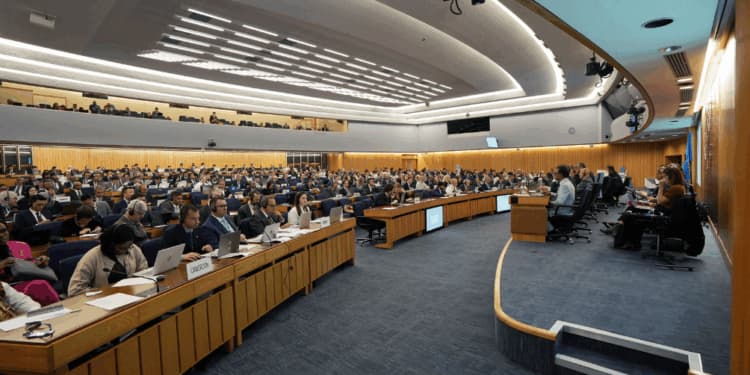
On November 23, India’s Directorate General of Maritime Administration (DGMA) issued Merchant Shipping Notice No. 09 of 2026. The notice puts into effect the revised recommendations for entering enclosed spaces aboard ships, which the International Maritime Organization (IMO) adopted through Resolution MSC.581(110) on June 27, 2025. The requirements apply to Indian-flagged vessels, foreign-flagged vessels operating in Indian coastal waters and the shipowners and ship management companies responsible for them.
Under the directive, enclosed space entry is to be treated as a major shipboard operation that is directly tied to personnel safety. Companies must allow enough time for planning, avoid unnecessary time pressure and set criteria to address extra hazards that may arise when simultaneous operations, or SIMOPS, are underway.
Planning, permits and access controls
The notice requires every ship to maintain an up-to-date, ship-specific Enclosed Space Register both onboard and ashore. That register must identify enclosed, connected and adjacent spaces, list the hazards linked to them and set out the control measures that apply. Before any entry, a competent person must carry out a risk assessment that takes account of cargo characteristics, ventilation, trapped hazardous atmospheres and other ship-specific factors.
No one may open or enter an enclosed space unless the master or a nominated responsible person has authorized the entry. Where risks to health or life are identified, a permit system must be used, and each permit may remain valid for no more than eight hours. The directive also bars single-person entry. Access points must be protected against unauthorized entry, and hazard signs together with dated, time-stamped schematic plans must be displayed at gangways or other entry points.
Companies are also required to provide thorough training in enclosed space safety management. That training must include the maintenance, calibration and use of atmospheric testing equipment.
Atmospheric testing and cargo-related precautions
Atmospheric testing must be performed by trained personnel using calibrated equipment before entry and again at regular intervals while the space is occupied. Samples must be taken at different levels and from different locations to reflect possible changes in atmospheric conditions. Where a space can be declared safe, it may only be entered after adequate ventilation and stable readings showing oxygen concentration of 20.9% by volume, carbon dioxide below 0.5% (5,000 ppm), flammable gases below 1% of the lower flammable limit (LFL) and toxic vapors below 50% of the occupational exposure limit (OEL).
Anyone entering an enclosed space must wear appropriate calibrated personal gas detection equipment. If ventilation fails or the atmosphere worsens, the instruction is to evacuate immediately. Extra attention is directed at ships carrying organic solid bulk cargoes, which can create dangerous atmospheres through oxygen depletion or the release of CO₂ or other hazardous gases. Such vessels must carry suitable CO₂ detection equipment and carry out testing before entry and frequently afterward, as appropriate.
The notice also deals with enclosed cargo hold access trunks, commonly called Australian ladders. These must be properly ventilated, tested and confirmed safe before use. When cargo capable of creating hazardous atmospheres is being carried, the access points must be secured with dedicated locking arrangements from the start of loading until they are confirmed safe after discharge.
Emergency response, rescue and compliance
Ships must keep a ship-specific enclosed space emergency response plan within their Safety Management System (SMS), hold regular rescue drills and check that established procedures work effectively. The directive makes clear that crews or shore personnel are not to attempt independent or ad hoc rescues, and that rescue work must remain controlled and methodical without putting rescuers at unnecessary risk.
Only specially trained personnel wearing suitable positive-pressure breathing apparatus and proper protective equipment may enter atmospheres known or suspected to be unsafe. Emergency Escape Breathing Devices (EEBDs) must not be used for enclosed space entry. Where shore personnel need to enter cargo spaces, pre-operational risk assessments are required, and terminal representatives must join the assessment when hazards are identified.
Compliance will be checked through company internal audits, superintendent inspections, vessel surveys and other relevant audits and inspections. The DGMA has asked all stakeholders to pass the requirements on to their personnel and ensure they are carried out effectively.