The ITF Seafarers’ Trust (ITFST) and the World Maritime University (WMU) say seafarers continue to face major obstacles to shore leave, based on responses from 5,879 seafarers who took part in the ITFST Shore Leave Survey. Their report, Shore Leave: Rare, Brief and in Danger of Extinction, brings together crew comments on why time ashore remains difficult to secure.
Port rules, workload and time pressure
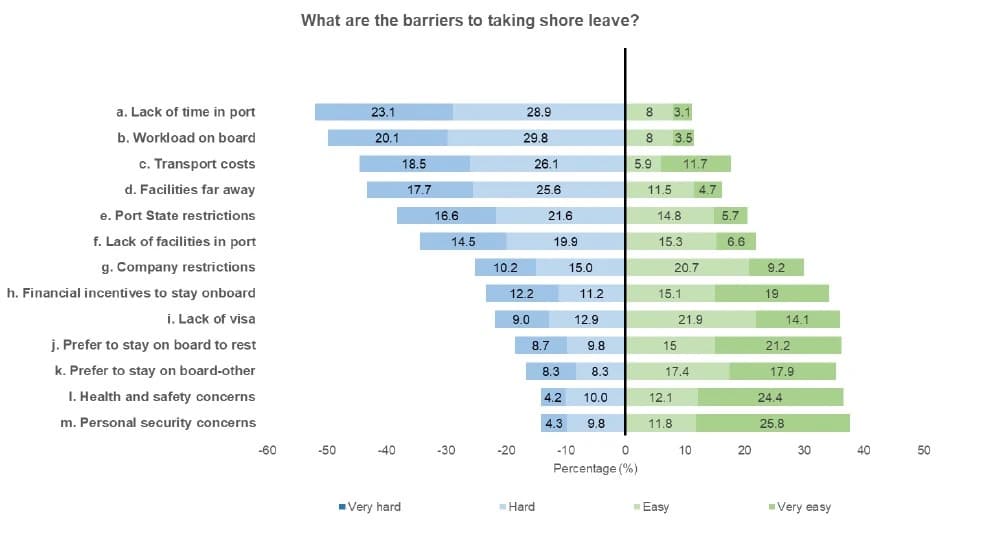
The survey points to port State restrictions as the most frequently mentioned barrier. Respondents described bureaucratic hurdles, long waits for authorities’ inspections, strict security checks and local regulations, which were said to have been tightened after the COVID-19 pandemic and linked to higher charges. Some seafarers also reported discriminatory treatment based on nationality, which made shore leave harder to arrange or led to it being denied.
Workload on board was another recurring theme. Comments linked this problem to ship inspections and heavier operational demands, including maintenance work while in port. Seafarers also stressed that simply having shore leave available does not mean there is enough time to use it during a port stay.
Usually, matching the work/rest balance is complicated, as you count with few hours between watches or the overtime you must do. Therefore, you always need to sacrifice your rest in order to go ashore.
The result, according to the survey responses, is a choice between getting limited rest on board and taking a hurried trip ashore.
Company limits, transport costs and new concerns
Many comments also pointed to company-imposed restrictions. These included shore passes being withheld, crew being kept on board for work, or pressure to return quickly once ashore. Transport expenses were another common issue, especially fees for shore boats, which were often cited by seafarers working on tankers.
Beyond those established barriers, the report says three emerging themes appeared in the comments: onboard management, the role of port agents and unethical port practices. Port agents were criticised for delaying shore passes or charging excessive fees, while some ports were described as using unfair treatment and other systemic barriers that further restrict access.
- Onboard management was identified as part of the problem in the new comments.
- Port agents were said to delay shore passes or charge excessive fees.
- “Unethical” port practices were reported to add further obstacles.
The survey also found that seafarers see shore leave as important for well-being. Some respondents argued it should be mandatory because of its value to the mental and physical health of the crew.