The Clean Port Coalition is urging the European Commission to harden the rules for port electrification and shore power as Brussels prepares to review the Alternative Fuels Infrastructure Regulation (AFIR). In a joint letter released on November 24, the group said more ambitious requirements are needed to turn policy goals into actual infrastructure at European ports.
21 groups back a call for faster action
The coalition includes 21 organizations, among them Danish Shipping, the Norwegian Shipowners’ Association, DFDS, the Maritime Battery Forum, Corvus Energy and Transport & Environment. It says electrification can cut emissions from port operations and shipping, especially for tugs, workboats, tankers and short-sea shipping, while also improving air quality and reducing Europe’s reliance on imported fossil fuels.
The group says it supports the European Commission’s Ports Strategy and Electrification Action Plan, but argues that political ambition must be matched by deployment on the ground. Without clearer regulatory signals, it warns, progress on port electricity networks will remain too slow for the sector’s needs.
Barriers still slowing deployment
According to the coalition, shore power systems, battery-electric vessels and terminal electrification are all gaining traction, yet wider adoption is still held back by several structural obstacles. It points to regulatory gaps, uncertainty about future electricity demand, limited standardization, uneven energy taxation, weak financing tools, delays in connecting to the grid and insufficient energy storage capacity.
The coalition says the AFIR review is an important chance to set infrastructure targets beyond 2030, giving investors more certainty over the long-term buildout of port electricity networks. It views that step as essential if Europe is to scale up electrification in a coordinated way.
What the coalition wants from the EU
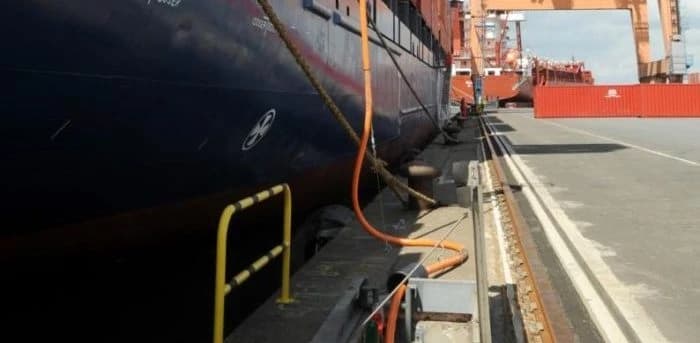
- Expand shore power deployment: establish predictable regulatory requirements for onshore power supply (OPS) for all vessels calling at EU ports, starting with the most operationally feasible segments.
- Introduce battery charging infrastructure requirements: make sure charging capacity is sufficient for the growing number of battery-electric vessels in European waters.
- Develop ports as clean energy hubs: prioritize and simplify grid access, accelerate energy storage deployment and add flexibility mechanisms to integrate port electricity infrastructure with wider power systems.
Beyond AFIR, the coalition says Europe also needs supportive electricity grid frameworks and a broad carbon market to make shore power cost-competitive with fossil fuels. It argues that if ports are to become hubs for clean energy production, storage and distribution, regulators must remove infrastructure and policy bottlenecks that stand in the way of maritime decarbonization, energy security and competitiveness.