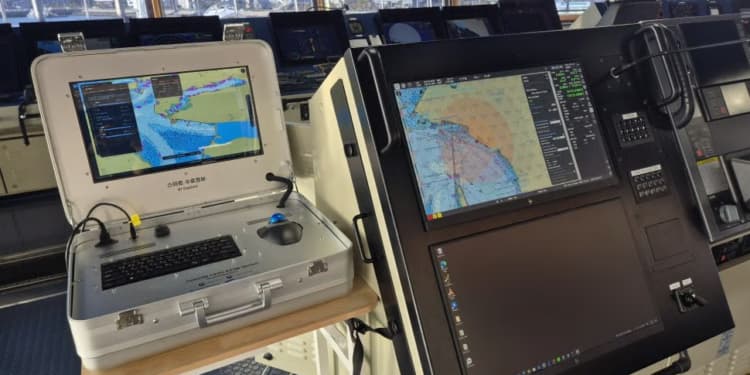
China unveils electronic navigation logbook system after ship trials

China has unveiled a domestically developed electronic navigation logbook system aimed at reducing manual recordkeeping and strengthening maritime safety oversight.
According to Chinese news outlets, China’s Maritime Safety Administration (MSA) announced the system on November 16, 2026, marking a step toward the digitalization of shipboard documentation. The system is designed to replace handwritten logbook entries with automated recording, while enabling ship-to-shore data synchronization. It also incorporates digital signatures and blockchain-based recordkeeping to help protect the authenticity and integrity of recorded information.
Navigation logbooks serve as official records of ship operations and provide essential evidence for maritime investigations, accident analysis and determining liability. Traditional paper-based logbooks rely on manual data entry, transmission and archiving, creating risks of recording errors, delays in retrieving information and difficulties integrating records with onboard automation systems and shore-based management platforms.
The new system aims to address these limitations while supporting maritime regulatory oversight and port state control inspections.
Wider vessel trials planned for 2027
The electronic logbook system has already completed trials aboard four cargo ships, with testing confirming stable operation of automatic information collection and data transmission functions.
Further shipboard trials are scheduled to begin in January 2027, covering vessels of different types, tonnages and operating routes.
As reported, development of the system began in 2025 through cooperation between the MSA, Dalian Maritime University, China Merchants Energy Shipping and China Classification Society.
The MSA also plans to develop supporting management regulations to clarify the legal validity of electronic logbooks and establish operational requirements.
The initiative is intended to reduce administrative workloads for seafarers, allowing crews to devote more attention to navigation safety while improving the accessibility and reliability of shipboard records.