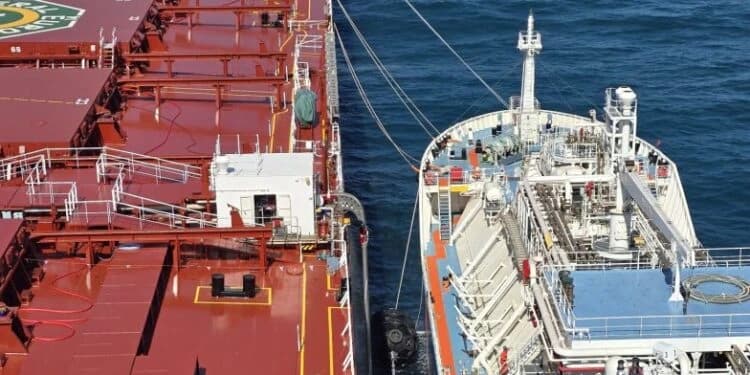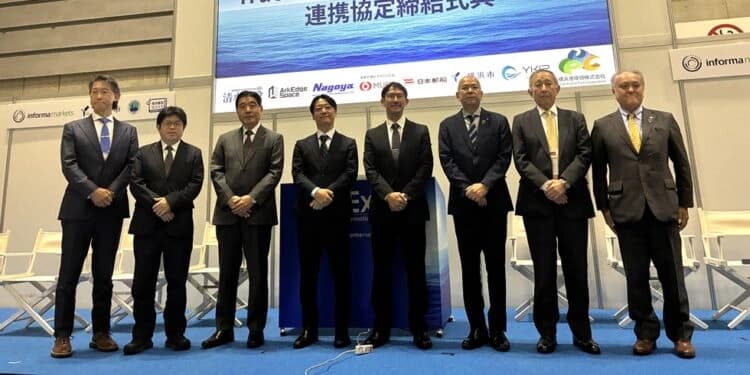
Eight Japanese organizations have come together to build remote-sensing technology that can measure greenhouse gas emissions directly from ships. The group signed a cooperation agreement on November 25 to move ahead with the True Emission Eye – Maritime project, which is designed to quantify and visualize ship emissions without any physical contact with vessels.
Consortium members and project purpose
The partners are NYK Line, MUFG Bank, Nagoya Electric Works, ArkEdge Space, Shimizu Corporation, City of Yokohama, Yokohama-Kawasaki International Port Corporation and Yokohama Port Corporation. At present, ship greenhouse gas emissions are mostly estimated from the type and amount of fuel burned, but the project is intended to add direct measurement to those calculations and make emissions data more accurate, objective and transparent.
Optical measurement and local trials
The technology relies on the fact that gases including carbon dioxide absorb and emit light at particular wavelengths. By combining optical readings of ship exhaust with extra data such as vessel distance and weather conditions, the system calculates greenhouse gas emissions.
Testing has already been carried out on NYK Group vessels while they were at berth and underway, with researchers comparing remotely gathered observations with actual vessel data. The Port of Yokohama will be the main demonstration site, where the partners will keep testing the system under different operating and environmental conditions.
Next steps for ports, satellites and wider monitoring
Looking ahead, the consortium plans to examine fixed monitoring stations in ports as well as the technical requirements for measuring ship emissions from satellites and combining satellite observations with ground-based data. The possible use of drones and satellites could eventually allow emissions monitoring over wider areas and give a clearer picture of how individual vessels are progressing in decarbonization.
Through the initiative, the eight organizations aim to improve the transparency of ship emissions data, support fairer market conditions and contribute to the decarbonization of shipping and port operations.