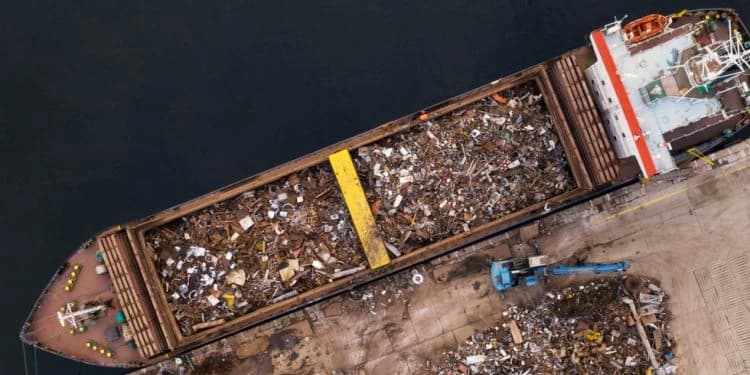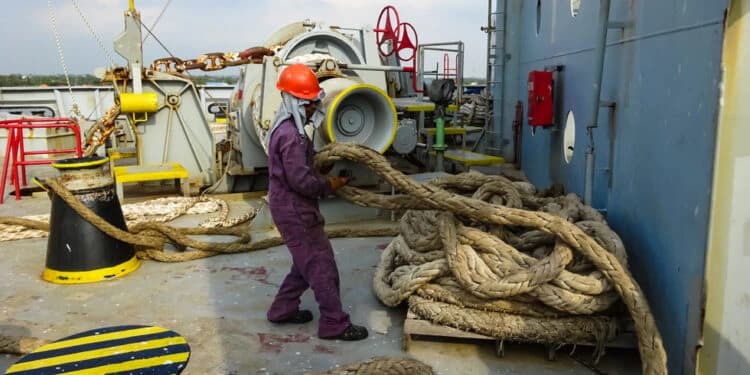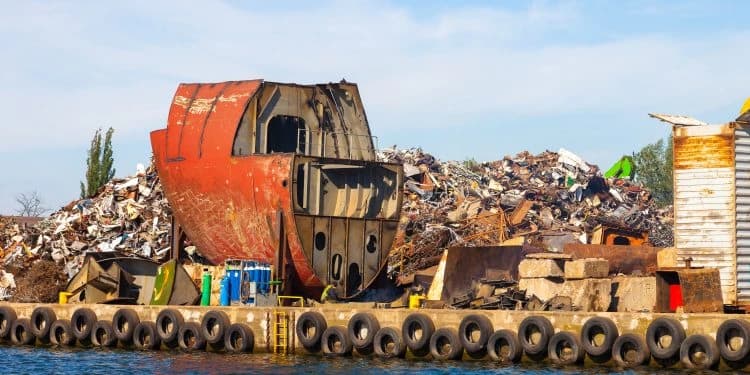
The discussion over whether two Indian ship recycling facilities should be added to the European List should hinge on compliance, environmental performance and measurable progress, not on broad assumptions, outdated perceptions or opposition to a recycling method, according to Henning Gramann, CEO of GSR Services GmbH. His argument comes as the European Parliament’s ENVI Committee has voted against the proposed inclusion of the two facilities in Alang, India, pushing the issue toward a plenary vote at the end of November.
For Gramann, the central question is whether decision-makers are evaluating each facility against the EU Ship Recycling Regulation or allowing the reputation of a place and a method to drive the outcome. He says those are not the same exercise, and he warns that confusing them risks turning a technical assessment into a political one.
Method alone does not determine environmental performance
Gramann begins from the premise that ship recycling is generally carried out using four recognised methods: beaching, landing, alongside and dry docking. Each has different technical features, strengths and weaknesses. In his view, none of the methods automatically ensures safe and environmentally sound recycling, and none should be ruled out in principle without looking at how the facility is actually organised and controlled.
He points to a technical comparison he prepared with M.A.R.C. in 2013 and published in 2014, which found that all four methods can satisfy the relevant legal requirements even though each presents distinct technical challenges. The practical test, he says, lies in the real conditions at the yard and in the site’s HSE management.
Among the factors he considers decisive are impermeable working surfaces, drainage, containment, hazardous-material handling, waste management, emergency preparedness, training, supervision and operational discipline. Those elements, rather than the method label attached to a facility, are what determine whether the operation can meet regulatory expectations.
Social matters also matter, he says, but the Hong Kong Convention and the EU Ship Recycling Regulation focus mainly on environmental protection and occupational health and safety. Wider social questions such as labour rights, working conditions and community welfare are not broadly covered by the specific rules, apart from references to the ILO framework.
That does not mean such questions should be ignored. Gramann’s point is that they require their own legal and regulatory basis instead of being informally folded into an EU-SRR assessment. In his formulation, the recycling method is only the means of accessing a ship; the actual risks and precautions must be judged separately.
Past pollution should not become a lasting verdict
Gramann does not dispute that ship recycling and other industrial activities have caused environmental harm in the past. He also says Europe itself has a pollution legacy that should not be overlooked. The history of many ship recycling destinations, including those in Europe, shows that environmental protection was often neglected, and the same was true for ports and shipyards.
For him, however, history should function as the basis for improvement rather than a permanent judgement on present-day operations. The relevant issue is whether pollution is prevented now, whether hazardous materials are identified and managed properly, and whether a facility can show that it is meeting the requirements that apply today.
That point matters especially, he says, when a facility has spent more than a decade investing in infrastructure, environmental protection and occupational safety. In such cases, the question should be whether the improvements are measurable and verifiable, not whether past practice in the wider region continues to shape the verdict.
He adds that recognising real improvements is not a relaxation of standards. In his view, it is simply the consistent application of those standards. If national or local rules impose additional requirements, that is acceptable, he says, but the EU-SRR review itself should focus on compliance with that regulation.
Waste controls beyond the yard matter too
Another element Gramann highlights is what happens after waste leaves the recycling yard. He argues that environmental responsibility does not stop at the boundary of the facility and that compliance can depend heavily on the quality of the local approach, particularly where enforcement is uncertain.
The availability and effectiveness of downstream waste-management facilities are therefore essential, he says. The EU-SRR reflects that reality by requiring evidence that the receiving waste-management facilities operate according to standards broadly equivalent to international and EU standards.
In his view, equivalence is not established by geography or by a simple line-by-line comparison of threshold lists. It must be demonstrated through evidence of environmental and human-health protection. That is why he says the audit findings on waste management in the hinterland of the proposed Alang facilities, which indicated broadly equivalent standards, should be taken seriously.
He makes a similar point about healthcare and emergency response for workers. These are not side issues, he says, but integral parts of responsible ship recycling, and they should count when there is verifiable evidence of improvement.
General criticism cannot stand in for facility-level review
Gramann accepts that pressure groups have a role in identifying environmental and social risks, and he says their concerns should be taken seriously. Even so, he argues that broad objections to beaching, to entire regions or to historical practices cannot replace a technical evaluation of individual facilities in the present.
He says criticism should ideally be based on site visits or at least on clear audit reports rather than on arguments made from a distance. If officially appointed auditors have inspected a facility, then its infrastructure, its operating practices and its management systems have already been examined. For that reason, he says, any judgement must engage directly with the evidence.
It is not enough, in his view, to reject a facility simply because it is located in a region linked to poor practices in the past or because it uses a method that has historically attracted criticism. He also warns against applying intense scrutiny to some methods while allowing shortcomings at facilities using other methods to receive less attention.
Treating one method as „evil“ by principle without detailed comparison means propaganda for others without clear facts.
He concludes that consistency requires the same objectives to be applied to every facility, regardless of location, additional requirements or the recycling method used.
Market access, EU capacity and the risk of reflagging
Gramann says the debate also raises broader strategic questions. On one hand, European ship recycling facilities deserve market access, recognition for the investments they have made and individual assessment. On the other hand, he argues that environmental law should not be used to shield European competitors from international competition, because sustainability is a global need.
He says European facilities can focus on the vessels and market segments they are realistically able to handle, including smaller and regional ships. Large commercial vessels are another matter: only a very small number of European facilities can accommodate them, yet they operate in an international market in which owners will choose between capacity, commercial conditions, flag requirements and available recycling options.
Gramann says this does not mean ESG considerations are unimportant, but he warns of a specific risk that he believes is not being adequately addressed. Proposals such as avoiding change of flag or creating a recycling fund, in his view, do not withstand reality.
He also argues that refusing facilities that can demonstrably comply with EU requirements does not create more recycling capacity. Instead, it may seriously harm European shipowners and foreign owners of EU-flagged vessels by narrowing their options. In a market where demand for recycling is rising, he says, a lack of sufficient EU-approved capacity leaves owners with no alternative but to change flag.
There is, he says, a wider strategic consequence. If EU regulatory choices make EU flags less attractive for older ships, owners may reflag before the vessels reach end of life. That would move ships outside the direct scope of EU rules and weaken the influence Europe wants to exercise. It could also reduce the overall importance of the EU in international shipping.
The likely result, he says, would be less transparency, less control and fewer chances to promote responsible recycling.
EU-SRR assessments should stay separate from other political goals
The EU Ship Recycling Regulation sets out the legal conditions for facilities outside the EU to be included on the European List. Gramann says the process is straightforward in principle: if a facility meets the requirements, the application should be assessed on that basis; if it does not, the deficiencies must be identified and addressed.
He says the same approach should apply within the EU, although in practice national and local administrations make the approval process different from one place to another, leading to different outcomes. That, he argues, makes consistency all the more important in the external assessment process.
He acknowledges that issues such as European industrial resilience, strategic autonomy, market protection and geopolitics may be legitimate political topics. But he says they belong in separate strategies and legal tools, not in a compliance review that is supposed to judge whether the EU-SRR has been met.
For Gramann, the underlying aim is simple: no further damage to health, safety and the environment from ship recycling, wherever it occurs. He says fully controlled recycling and the recirculation of materials are responsibilities shared by shipowners and recyclers alike. The business is dirty, he says, but it does not have to be polluting.
He adds that improvements should be welcomed, continued progress should be demanded and every recycling facility should be held to account for its performance, alongside the shipowners whose decisions shape the process. At the same time, he says, the debate must be capable of recognising when a facility has made substantial progress and can show compliance with internationally recognised and European standards.
He argues that the upcoming plenary vote is therefore about more than two facilities in India. In his view, it is a test of the credibility of the European regulatory framework and of whether demonstrated compliance will be acknowledged even when it challenges established perceptions.
The EU-SRR is not a political instrument to prejudge or protect one recycling method or market.
He says it must remain evidence-based, predictable and consistent, and that it should be applied and judged accordingly.
Shared responsibility across the maritime value chain
Gramann ends by stressing that lasting progress in global ship recycling cannot be achieved by regulation alone, or by the efforts of individual facilities in isolation. He says it depends on cooperation across the maritime value chain, with each stakeholder contributing in a different way.
Shipowners, recycling yards, flag states, classification societies, independent auditors, regulators, NGOs and civil society each have a role, he says. When shipowners provide transparent inventories of hazardous materials and carry out thorough due diligence, and when recycling yards invest in safe infrastructure, training and downstream waste management, measurable progress becomes possible.
He says regulators and auditors are needed to ensure standards are applied fairly and consistently. At the same time, dialogue with NGOs and local communities helps keep attention on continuous improvement rather than on confrontation alone.
Rather than framing ship recycling as a conflict between industries, regions or methods, Gramann argues that it should be seen as a shared industrial, environmental and sustainability responsibility. In his view, a circular maritime economy can work only if all stakeholders cooperate from cradle to grave on the basis of facts, mutual accountability, understanding and a common commitment to protecting people and the environment whenever a vessel reaches the end of its operational life.