In maritime leadership, the facts of a situation matter, but so does the route a decision-maker takes from those facts to a final judgment. Masters, senior officers and shore-based managers regularly depend on experience and instinct to assess performance, solve problems and guide crews with different perspectives. The danger is that an apparently clear conclusion can still be shaped by hidden assumptions.
That is why the Ladder of Inference remains a useful leadership tool. It explains how people move from observing information to acting on it, and it gives maritime professionals a practical way to check their reasoning, build self-awareness and support clearer communication between shipboard and shore-based teams.
How the ladder explains decision-making
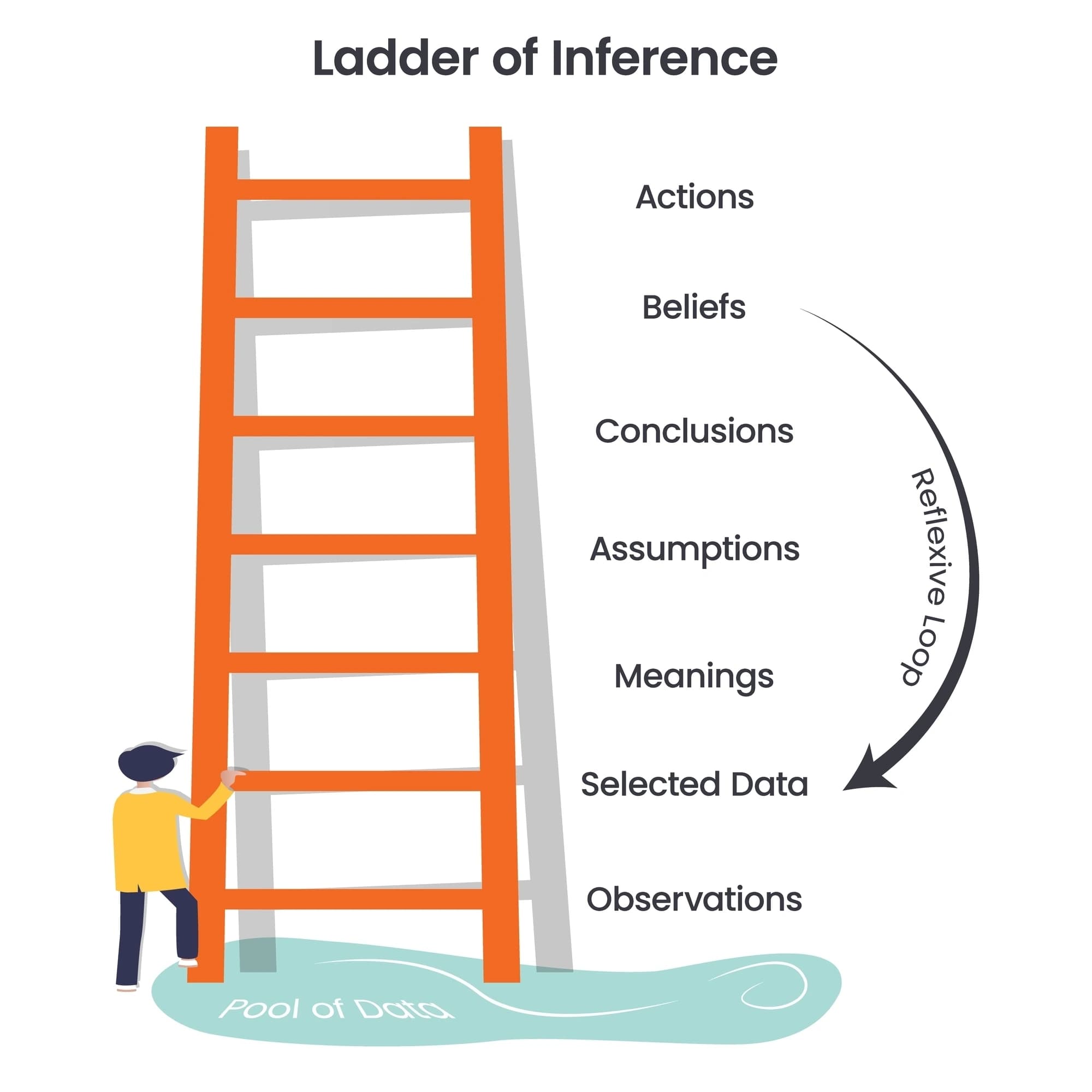
The Ladder of Inference traces its roots to the work of Harvard organizational theorist Chris Argyris and later appeared in The Fifth Discipline Fieldbook (1994). It describes the mental process by which people turn raw observations into choices and actions, often at speed and without noticing the steps in between.
The model identifies seven stages:
- Observing: taking in available facts and information.
- Selecting: focusing on some details while overlooking others.
- Interpreting: assigning meaning to the selected information.
- Assuming: developing explanations based on those interpretations.
- Concluding: reaching judgments about the situation.
- Believing: forming or reinforcing existing beliefs.
- Acting: responding according to those beliefs.
Because those stages can happen very quickly, people may filter information through their own experience and expectations until a personal interpretation feels like a settled fact. The model asks leaders to work backward through that chain and examine which facts were noticed, what meaning was attached to them and which assumptions helped shape the conclusion.
Why self-awareness matters in leadership judgments
Judging people is part of everyday leadership, whether the setting is supervision, performance review, feedback or informal contact. But assessments of competence, commitment and attitude can reflect more than the behavior being reviewed. Harvard Business Impact links the ladder to self-awareness, noting how pre-existing beliefs influence how people interpret others, especially when disagreement has to be handled or performance has to be assessed fairly.
A helpful distinction is between describing what someone did and deciding why they did it. The first can be examined against evidence; the second needs more information. That does not reduce the value of professional experience. Instead, it makes experience more reliable by encouraging leaders to test their first impressions before those impressions influence feedback, relationships or personnel decisions.
For leaders working with multinational crews, the issue is also interpersonal. Differences in communication style, professional background and expectation make it important to ask for clarification before treating another person’s behavior as self-explanatory.
Ship and shore communication
Maritime organizations depend on information moving among crews, technical departments, fleet managers and company leadership. Those groups do not have identical duties, and they do not always see the same operational details. The International Maritime Organization treats the human element as reaching beyond seafarers to the wider maritime system, while the UK’s Maritime and Coastguard Agency, in its Leading for Safety guidance, stresses listening, effective communication and teamwork.
When a leader explains the evidence behind a decision, others can see not only what was decided but why. Likewise, asking colleagues how they reached a different conclusion may uncover information that was absent from the original assessment. That matters in discussions about schedules, workload, performance and operational priorities, where different roles can produce different judgments for good reason.
This process can be especially valuable across the ship-shore divide, where the same event may be viewed through different responsibilities and information sets. Making those differences visible reduces the risk that a disagreement is mistaken for resistance or poor judgment when it may simply reflect incomplete information.
Hierarchy, challenge and constructive disagreement
Clear authority and defined responsibilities remain central onboard, but rank can still affect whether people question an assessment or share information that cuts across a senior colleague’s view. In a study of relationships among masters, watchkeeping officers and pilots, the Transportation Safety Board of Canada documented deficiencies in information exchange and reluctance to question decisions.
The study did not examine the Ladder of Inference, yet its findings reinforce the need for open communication across professional roles. For leaders, constructive disagreement does not have to mean challenging authority for its own sake. It can simply mean asking what evidence supports a conclusion, provided the question receives a thoughtful answer.
What do I actually know? Separate observable facts from interpretations. What am I assuming? Identify the expectations or experiences influencing the judgment. What might I be missing? Invite another perspective and reconsider the evidence.
Three questions offer a starting point for using the model in everyday leadership.
Using the model in practice
The ladder is a reflection tool rather than another operational procedure, but it can still support crew reviews, debriefings, management meetings and conversations after disagreement. Leaders can ask people to explain their reasoning instead of only stating their conclusion, then compare the information available at the time, note where understanding differed and separate outcomes from assumptions about intent.
That approach also supports organizational learning. When managers look closely at how information was interpreted during a decision, the discussion can move beyond personal judgment and toward the reasoning process itself. The resulting reflection can improve future communication and management practice without diluting accountability.
The objective is not to slow down every decision or soften responsibility. It is to make important judgments clearer and easier to correct when needed. Effective leadership still requires confidence, but it also requires the discipline to notice when a conclusion may deserve a second look.