Greek shipowners face $78bn in assets at risk from energy transition, study says
A new UCL and WWF Greece study finds that Greek shipowners hold approximately $78 billion in assets exposed to energy transition risks, more than twice the exposure of Japan, the second most affected shipowning nation.
Published on November 19, the report, “Real economy consequences for Greece from success or failure of the Net-Zero Framework”, examines the potential financial consequences of declining fossil fuel cargo demand and uncertainty surrounding international shipping’s decarbonization regulations. The analysis identifies $77.78 billion in Greek-owned oil tanker and LNG carrier assets exposed to demand-side transition risks, compared with $37.67 billion for Japan and $34.08 billion for China.
The study estimates that the Greek-owned fleet comprises approximately 5,800 ships with a combined capacity exceeding 458 million dwt, representing around 19% of the global fleet.
Greek shipowners have particularly significant exposure to sectors involved in transporting fossil fuels, accounting for 26% of global oil tanker tonnage, 23% of LNG carrier tonnage and 22% of bulk carrier tonnage.
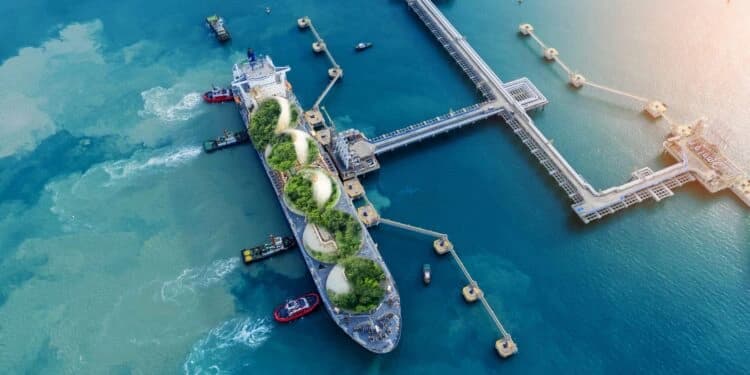
According to the researchers, LNG carriers face the greatest demand-side risk because of their high capital costs, specialized cargo requirements and limited opportunities to transport alternative commodities.
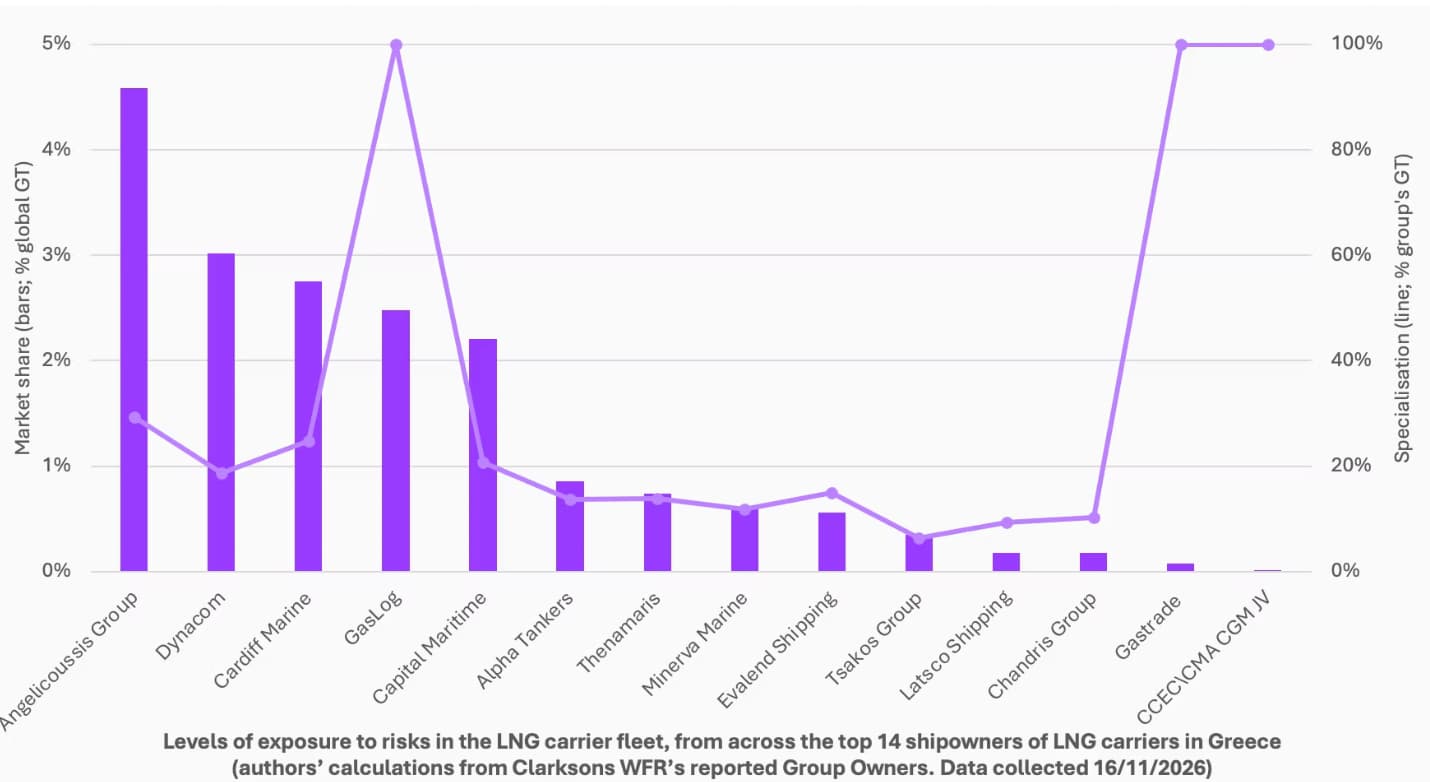
The estimated financial exposure does not represent projected losses. Instead, it identifies assets potentially vulnerable to declining demand and changes in vessel values under the energy transition scenarios examined.
The UCL and WWF Greece report also highlights the following findings:
- Greek shipping faces a dual transition risk: Shipowners must respond to both declining demand for fossil fuel cargoes and the transition toward lower-emission marine fuels and technologies.
- LNG carriers face particularly high financial exposure: Their specialized design, high construction costs and limited ability to transport alternative cargoes make them especially vulnerable to changes in global LNG demand.
- Smaller Greek shipowners are particularly exposed to regulatory uncertainty: Of approximately 700 Greek shipping companies, only 19 operate more than 50 vessels. Smaller operators may have fewer resources to manage overlapping regulations and changing compliance requirements.
- LNG could remain competitive until the mid-to-late 2030s: Depending on future fuel prices and regulatory requirements, LNG-powered vessels could remain among the most cost-effective compliance options for another decade.
- Delaying the NZF would not eliminate transition risks: The researchers argue that postponing global regulations could encourage the continued development of regional measures, increasing administrative complexity and compliance costs.
- A global framework could improve investment predictability: Clearer international requirements would help shipowners assess when existing vessels and fuel technologies may become less competitive and plan future investments accordingly.
- Alternative IMO proposals face political and procedural obstacles: The study estimates that NZF-based proposals attracted support from more than 50 countries during previous negotiations, compared with approximately 22 supporting fundamental redesign proposals.
- The EU ETS could remain fully applicable alongside future IMO requirements: According to the researchers, failure to adopt a comprehensive global framework could increase the likelihood of overlapping regional and international measures.
- The energy transition could affect vessel values differently from normal shipping cycles: The report warns that declining demand for particular fossil fuel cargoes could permanently affect the commercial competitiveness of certain vessels, rather than creating temporary market downturns.
- Diversification could help reduce financial exposure: The researchers identify diversification away from fossil fuel-dependent cargo segments, alongside clearer global regulations, as important ways for Greek shipowners to manage transition risks.
Regulatory uncertainty adds to financial risks
Beyond changing cargo demand, the report identifies a second risk associated with the transition away from fossil fuels as a source of energy for ships.
The researchers argue that delays in adopting the International Maritime Organization’s (IMO) Net-Zero Framework (NZF) could increase uncertainty for shipowners, particularly if global regulations are replaced by overlapping regional requirements.
Professor Tristan Smith of the UCL Energy Institute explained: “Greek owners already face one transition they cannot control, which is related to changes in the demand for the cargoes their ships carry.”
He added:
Supporting the NZF, the only adoptable architecture on the table at MEPC 85, is a chance to make the second one, in how shipping’s own energy transition is regulated, predictable, lower burden, less complicated and more supportive of a mix of decarbonisation strategies and pathways.
The analysis suggests that a clear global regulatory framework could help shipowners make investment decisions by providing greater certainty about the future competitiveness of different marine fuels and vessel technologies.
Depending on policy details and fuel price developments, the researchers estimate that LNG could remain among the most cost-effective compliance options until the mid-to-late 2030s.
However, the report warns that postponing global regulation could leave the EU Emissions Trading System (ETS) operating alongside an IMO fuel standard and potentially additional regional carbon pricing measures, increasing compliance complexity.
Smaller shipowners face additional challenges
The study also highlights the potential implications for smaller Greek shipping companies. Of approximately 700 companies operating Greek-owned fleets, only 19 own more than 50 ships, while the average company operates around eight vessels.
According to the researchers, smaller operators may have fewer financial and administrative resources to manage changing fuel requirements and multiple regional regulations.
The report argues that a consistent global framework would provide greater predictability and help companies manage the timing of investments in alternative fuels and vessel technologies.
The findings come amid disagreement over the IMO’s proposed NZF. Earlier this week, Union of Greek Shipowners (UGS) President Melina Travlos called for regulations that are “pragmatic, proportionate and implementable,” while raising concerns about the relationship between EU regional measures and a global agreement.
Meanwhile, Demetres Karavellas, CEO of WWF Greece, warned:
This report shows that Greece, as the world’s leading shipping nation, has more to lose from delay than almost anyone else. Opposing the NZF will not stop the transition.
The research was published ahead of ISWG-GHG 23, scheduled for November 23–27, and MEPC 85, opening on November 30, where IMO Member States will continue discussions on the future of the global emissions framework.
Frther delays could increase regulatory fragmentation and investment uncertainty, urging shipowners to participate constructively in developing the NZF and its implementation guidelines.