Clean Shipping Alliance questions Greenland’s planned scrubber discharge ban

The Clean Shipping Alliance (CSA) has expressed concerns over Greenland’s decision to introduce phased restrictions on scrubber wastewater discharges, questioning the scientific evidence supporting the measures.
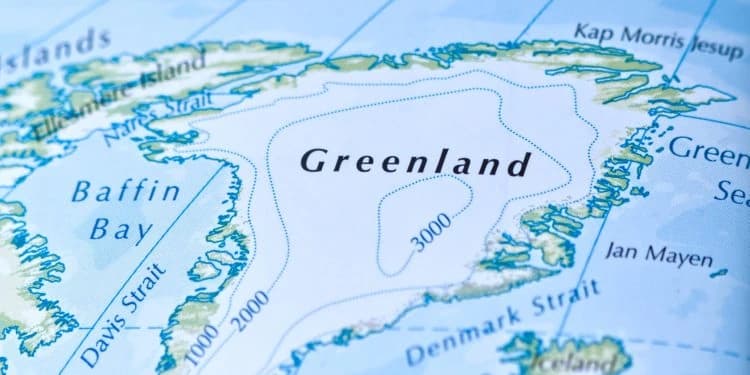
Greenland’s Parliament (Inatsisartut) has unanimously approved a proposal directing the government to introduce a phased ban on wastewater discharges from ships’ exhaust gas cleaning systems (EGCS), commonly known as scrubbers.
The restrictions will initially apply to open-loop scrubber discharges in ports, internal waters and territorial waters from July 1, 2027. From July 1, 2029, the prohibition will extend to all scrubber systems, including closed-loop and hybrid installations.
The decision follows the OSPAR Commission’s agreement to phase out scrubber wastewater discharges in ports and internal waters across the North-East Atlantic. However, Greenland’s approach goes further by including territorial waters within the planned restrictions.
Environmental organizations, including the Clean Arctic Alliance, have welcomed Greenland’s decision, calling for similar measures across the Arctic and an eventual global prohibition through the International Maritime Organization (IMO).
Clean Shipping Alliance calls for scientific justification
Responding to the decision, Andreas Chrysostomou, Executive Director of the Clean Shipping Alliance, expressed disappointment with the planned restrictions, while acknowledging the importance of protecting the Arctic marine environment.
According to CSA, the central question is whether Greenland has conducted a location-specific assessment of the environmental risks associated with scrubber discharges.
The organization referred to IMO circular MEPC.1/Circ.899, which provides guidelines for evaluating the environmental risks of EGCS wastewater discharges, including discharge composition, dilution, ecotoxicity and characteristics of the receiving environment.
“If Greenland has conducted an assessment to support its planned restrictions, we urge them to publish it,” Chrysostomou said.
CSA argued that, without an assessment conducted under the IMO framework, the scientific justification for the restrictions has not been demonstrated through that process.
The organization also questioned the reliance on a precautionary approach, arguing that this should not replace the risk assessment methodology outlined in the IMO guidelines.
Referring to studies conducted in other locations, including a recently published peer-reviewed assessment in Puget Sound, CSA maintained that assessments considering actual operating conditions have identified low or negligible environmental risks.
However, the organization acknowledged that environmental risks should be evaluated according to local conditions, rather than assuming that findings from one region necessarily apply elsewhere.
Concerns over regional restrictions and IMO regulations
CSA also raised concerns about the regulatory implications of Greenland’s decision, particularly its extension to territorial waters and the inclusion of closed-loop and hybrid scrubber systems from 2029. According to Chrysostomou, operators should be informed of the evidence supporting each phase of the restrictions, with different scrubber technologies and operating modes assessed individually.
The organization further argued that calls for a global scrubber ban, beginning in the Arctic, would require changes to international regulations.
CSA pointed to Regulation 4 of MARPOL Annex VI, which recognizes approved exhaust gas cleaning systems as an equivalent means of complying with sulphur emission requirements.
In its view, changes to this framework should be addressed through a transparent IMO process supported by location-specific scientific evidence, rather than through separate regional restrictions ahead of discussions at the IMO Sub-Committee on Pollution Prevention and Response (PPR 14).
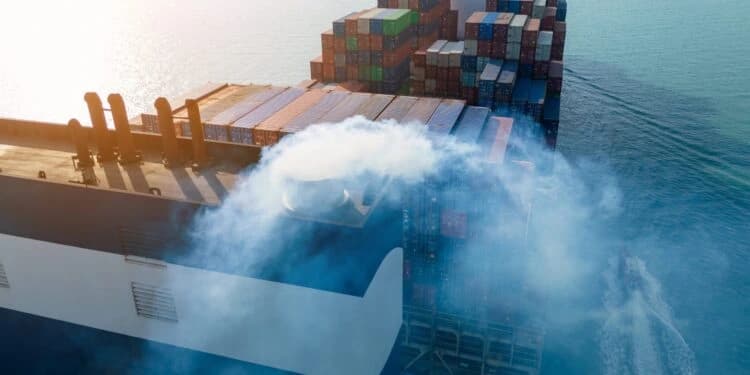
The Clean Shipping Alliance also challenged the argument that scrubbers simply transfer pollution from the atmosphere to the marine environment. According to CSA, scrubbers remove sulphur and other substances from exhaust gases, reducing atmospheric emissions while transferring captured substances into seawater.
The organization maintained that EGCS can also reduce particulate matter, polycyclic aromatic hydrocarbons (PAHs) and metals in exhaust emissions, particularly benefiting air quality near ports and coastal areas.
CSA further argued that environmental comparisons should consider the complete lifecycle impacts of marine fuels, rather than focusing exclusively on scrubber wastewater discharges.
Citing a 2021 CE Delft analysis, the organization stated that refining marine gas oil (MGO) could increase lifecycle CO₂ emissions by 10–25%, compared with an additional 1.0–1.5% associated with operating scrubbers.
It also referred to a 2025 well-to-wake study submitted to the IMO as PPR 13/INF.6, which, according to CSA, found that heavy fuel oil used with scrubbers could deliver equal or lower environmental impacts than very low sulphur fuel oil (VLSFO) and MGO across most assessed categories.
On this basis, CSA questioned whether initiatives relying on MGO, including the proposed Nuuk–Reykjavík green corridor, could automatically be considered environmentally preferable to continued EGCS use.
“Assessments should compare complete fuel pathways, not a visible discharge against an alternative assumed to have no impact,” Chrysostomou concluded.