The Getting to Zero Coalition says the European Union’s proposed shipping fuel support under the EU Emissions Trading System needs clearer long-term design if it is to help commercialize zero-emission fuels rather than channel money toward cheaper transitional options. The warning comes in an insight brief that welcomes the idea of Sustainable Maritime Alternative Propulsion, or SMAP, but argues that uncertainty over how allowances are distributed and which fuels qualify could weaken investment decisions across the sector.
SMAP under the EU ETS revision
In its brief, “Reflections on SMAP in the EU ETS revision for maritime”, the Global Maritime Forum’s Getting to Zero Coalition examines how the proposed SMAP mechanism might better support scalable zero-emission fuels. The European Commission put forward a revision of the EU ETS in July 2026 that includes SMAP and, if adopted, would set aside up to 110 million emission allowances through 2040 for sustainable maritime fuels and for the deployment and operation of zero-emission propulsion technologies.
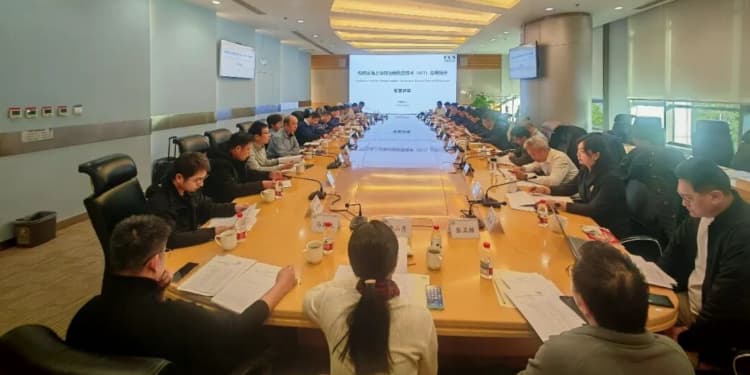
The Coalition says the proposal is welcome, yet it cautions that uncertainty about who receives support and which fuels can access it may distort market signals. In its view, that could favor lower-cost transitional fuels and disadvantage companies that have already committed to alternative fuel projects outside Europe. The brief is based on industry consultations and a public-private dialogue co-hosted with Transport & Environment, with about 26 representatives taking part from across the maritime value chain.
It places SMAP alongside FuelEU Maritime, the Renewable Energy Directive and the Alternative Fuels Infrastructure Regulation as part of the EU’s broader policy framework. Even so, the Coalition says the mix of binding emissions reduction targets and carbon pricing has not yet created enough demand for alternative fuels because a fuel cost gap still stands in the way of large-scale uptake. That shortage of demand is especially affecting renewable fuels of non-biological origin, or RFNBOs, and is slowing cost-competitive production, vessel orders and bunkering infrastructure.
How the Coalition says SMAP could be strengthened
As the EU ETS revision moves through the legislative process, with an agreement targeted for the first quarter of 2027, the Coalition identifies three areas where SMAP could be improved. Its concern is not with the idea of directing support to shipowners, which it describes as a strength, but with whether the current structure can generate the durable market signals needed for RFNBO projects to become commercially viable.
If allowances are issued on an annual basis, the brief argues, cheaper and more available fuels such as biofuels could absorb support before RFNBOs reach commercial scale. That would leave shipowners unable to commit to multi-year fuel contracts without clearer price and regulatory visibility, while producers would struggle to raise financing without buyers locked in. The Coalition says neither side can give lenders confidence that SMAP backing will still exist across the full term of a 10-year contract signed in 2027.
…the Coalition noted.
To help solve that problem, the brief proposes four possible design tools:
- Forward allocation: Reserve allowances in advance for specific multi-year projects so support is clear before capital is committed.
- Multi-year allocation blocks: Distribute allowances in fixed stages to stop more mature fuels from using them up too quickly.
- Ringfencing for RFNBOs: Protect a dedicated share of allowances for RFNBOs so they are not crowded out by cheaper transitional fuels.
- Intermediary guarantees: Shield fuel producers’ revenues if buyers change fuels or switch suppliers.
The Coalition says these mechanisms could turn regulatory support into bankable commitments and make it easier to conclude long-term offtake agreements while financing zero-emission fuel production.
Fuel origin rules and corridor exemptions
The proposed SMAP framework would require eligible fuels to be produced in the EU, in an ETS-linked country, or in an “ETS as a service” country, subject to applicable exemptions. Yet most of the industry representatives involved in the Coalition’s discussions favored more open eligibility rules, reflecting shipping’s global operating model and the international structure of its fuel supply chains.
According to the brief, rigid geographical limits could penalize early movers that have already signed offtake agreements with non-European fuel producers and could discourage additional investment at a sensitive point in the sector’s energy transition ahead of 2030. The Coalition also argues that a fuel’s place of origin does not by itself determine whether it is renewable or what its emissions impact will be. Rather than excluding compliant fuels made outside eligible countries, it says the EU should use differentiated financial incentives to support competitiveness.
Among the options it lists are lower support rates for non-EU fuels, transitional arrangements for early movers, and regional reference prices that take account of RFNBO production cost differences. It also points to extending eligibility to third-country fuels bunkered at European ports, backing projects that use European clean technologies such as electrolyzers, and countering unfair competition through trade policy and strict lifecycle carbon intensity requirements. The Coalition says such flexibility could help expand both European and global RFNBO production, increase fuel availability, protect European shipping companies operating internationally and still serve the EU’s competitiveness and energy security goals.
If policymakers keep strict rules of origin, the Coalition recommends replacing the proposed green shipping corridor exemption with a clearly defined list of eligible non-EU ports. Under the current plan, the European Commission would be able to adopt and update implementing acts for projects in non-EU ports, including those involved in green shipping corridors with European ports.
The brief says that uncertainty over which ports would qualify could slow business planning and investment. It also warns that there is no universally accepted definition of green shipping corridors and that public information on participating stakeholders is limited, creating further implementation difficulties. In addition, tying green shipping corridors too closely to regulatory exemptions could weaken their original role as voluntary, route-based decarbonization projects and turn them into arrangements driven mainly by compliance needs.
To avoid that outcome, the Coalition calls for a targeted list of exempt ports, clear eligibility criteria and a transparent process for updating the list.
Balancing near-term compliance with longer-term fuel scale-up
The Coalition says it will continue examining how SMAP interacts with other regional policy tools as EU ETS talks progress. For EU policymakers, it argues, the central task is to balance immediate emissions reductions with the longer-term investment requirements of emerging zero-emission fuel pathways. Cheaper transitional fuels may offer a near-term compliance route, but the way SMAP is structured could decide whether EU financial incentives also create the sustained demand needed to expand RFNBO production, unlock zero-emission vessel investment and build out bunkering infrastructure.