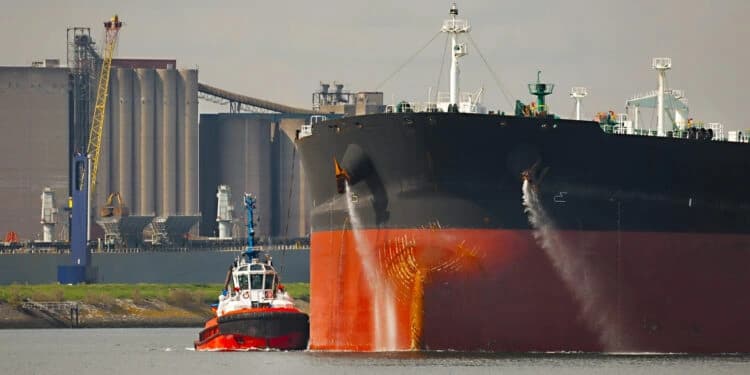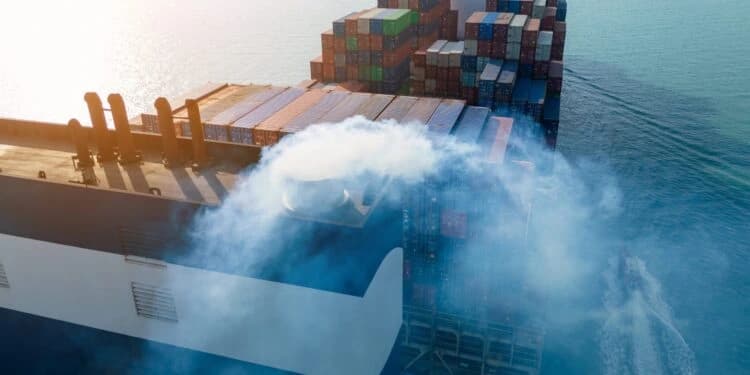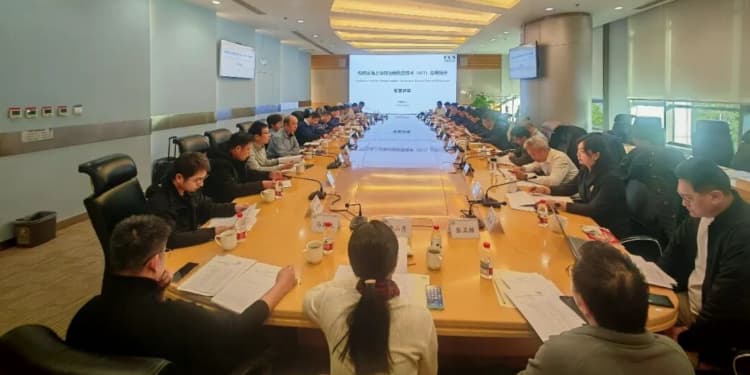
The World Shipping Council has pressed governments to settle binding global emissions rules for international shipping as liner operators’ investment in dual-fuel vessels moves beyond $200 billion. With negotiations due to resume at the International Maritime Organization, the group warned on 23 November that lingering uncertainty could weaken spending on cleaner fuels and the infrastructure needed to support them.
WSC urges a global deal without delay
The council said its appeal follows a recent joint declaration from nine international shipping associations, which called for effective and enforceable worldwide rules that would give investors confidence, speed up the shift to cleaner fuels and preserve a level competitive environment. WSC said the industry needs agreement now, rather than more extended uncertainty while governments debate the shape of the framework.
According to the group, container shipping and vehicle carriers have already committed more than $200 billion to over 1,350 dual-fuel vessels, and more than 500 of those ships are already operating. WSC said those investments will only deliver their full emissions-cutting potential if cleaner marine fuels are available and can compete commercially with conventional options.
Three priorities outlined by the council
Before the IMO discussions, WSC set out three elements it considers essential for a credible global regime. It wants emissions reduction requirements that point clearly toward net zero in line with the IMO’s 2023 GHG Strategy, enforcement that applies uniformly across ships from the first year of implementation, and incentives that reduce the gap between conventional fuels and zero- and near-zero GHG fuels.
- Predictable emissions reduction requirements, with a credible net-zero pathway aligned to the IMO’s 2023 GHG Strategy.
- Consistent enforcement across ships from the first year of implementation.
- Incentives for cleaner fuels that narrow the price difference versus conventional fuels.
Joe Kramek, President and CEO of WSC, said shipowners and fuel producers need rules that allow them to keep investing with confidence. The organization also said a delay, or a system focused mainly on gaining experience or on fuel market readiness, would only extend uncertainty. It warned that if no effective global deal is reached, a patchwork of national and regional emissions regulations could raise costs and complicate international trade.
IACS calls for practical implementation
The International Association of Classification Societies issued a separate statement stressing that any emissions reduction measures adopted by IMO members must be capable of practical implementation. It pointed to issues that have featured in the wider decarbonization debate, including technical feasibility, operational safety, implementation hurdles and the availability, scalability and safety of alternative fuels.
Clear regulatory requirements supported by timely technical guidelines.
IACS said it does not take a position on the political principles or the level of ambition in a GHG emissions reduction framework, noting that those choices belong to IMO Member States. Acting as an independent technical adviser to the IMO, it said agreed measures should be implemented in a practical and globally coordinated way, with regulations that can work consistently worldwide. The association also said it will continue to work with the IMO on any agreed solution.
With COP31 exposing a widening divide in global climate talks over the pace, cost and financing of the energy transition, MEPC 85 is now another important test of whether the international community can still find common ground on climate action.