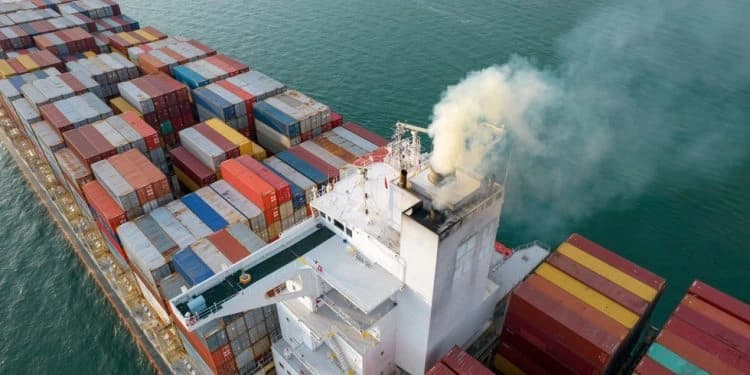
A fresh proposal from the Mærsk Mc-Kinney Møller Center for Zero Carbon Shipping (MMMCZCS) and the Royal Institution of Naval Architects (RINA) argues that the IMO should redesign its Carbon Intensity Indicator and reinforce energy efficiency management before MEPC 85.
Analysis points to limits in the current CII model
The center’s latest Countdown analysis says existing energy efficiency rules could be adjusted so they better capture how ships actually perform at sea and encourage more effective operational changes. Energy efficiency is a major topic for MEPC 85, which is set for November 30 to December 3, 2026. Among 21 submissions on the issue, 19 focus on the Carbon Intensity Indicator (CII).
Since the CII was introduced in 2023, critics have argued that it does not fully represent operational efficiency. Its current formula measures annual CO2 emissions against vessel capacity and distance sailed, but factors such as port delays, cargo heating and cooling, and auxiliary machinery demand can worsen a ship’s rating even when propulsion performance is similar. As a result, ships with comparable engine efficiency may still end up with different grades because of how they operate.
MMMCZCS and RINA say a propulsion-based CII would improve that picture by counting only main engine fuel consumption during sea passages. Their analysis of about 53,000 containership voyages in 2024 suggests the method would more closely track the link between engine load and fuel use. The proposal arrives amid wider calls for a revised CII calculation method.
SEEMP would take on non-propulsion efficiency measures
Non-propulsion activities generally make up around 20% of a ship’s fuel consumption. Under the proposed structure, those emissions would still be covered by IMO reporting, while efficiency gains would be pursued through a stronger Ship Energy Efficiency Management Plan (SEEMP).
- Mandatory implementation of planned energy efficiency measures.
- An Energy Efficiency Implementation Log (EEIL) documenting actions and supporting evidence.
- Internal reviews and external verification of implementation.
- Audits triggered by poor performance or persistent compliance discrepancies.
- A dedicated person ashore responsible for energy efficiency management.
The approach borrows from the International Safety Management (ISM) Code, with more weight placed on management systems, accountability and continuous improvement. The ideas will be reviewed during Phase 2 of the IMO’s short-term GHG reduction measures review, which is expected to run until spring 2028. With uncertainty still hanging over adoption of the IMO Net-Zero Framework, the authors say improving current energy efficiency rules is another route to accelerate shipping’s decarbonization.